

♥ Wishlist
Compare 34 verified Face Mask Filters for Everyday Respiratory Protection products in India. Reviews, ratings, pros, cons and buying advice updated for October 2026.


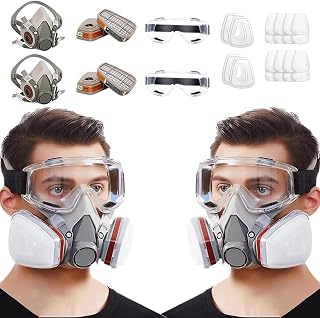


Choosing a face mask filter in India is not simply a matter of selecting the product with the highest filtration number or the largest pack size. The useful value of a mask or replacement filter depends on the type of particles it is designed to capture, the quality of the filter material, how well the mask seals around the face, breathing resistance, replacement requirements, construction quality and whether the claimed standard is appropriate for the intended use.
For Indian buyers, the decision can be particularly relevant in cities and environments where people encounter road dust, construction dust, smoke, fine particulate pollution and seasonal changes in air quality. A filter that is suitable for ordinary dust may not offer the same level of protection as a properly fitted particulate respirator. Similarly, a product marketed with terms such as “PM2.5 filter”, “activated carbon”, “N95-style”, or “multi-layer filtration” should not automatically be treated as equivalent to a certified respirator.
This expanded 2026 buying guide explains the factors that matter when comparing value-oriented face mask filters in India. It is designed for shoppers who want to compare specifications, understand filter types, avoid misleading claims and choose a product appropriate to their actual use rather than buying purely on price.
Good value is different from the lowest purchase price. A low-cost filter can become poor value if it has a short usable life, fits badly, creates excessive breathing resistance, requires an expensive proprietary replacement system or provides unclear information about its filtration performance.
A genuinely useful value pick should balance filtration capability with fit, comfort, durability, replacement cost and transparency. For reusable masks, the filter and the mask body should also be considered together because a high-performing filter cannot compensate for substantial leakage around the edges.
One of the most important distinctions for shoppers is the difference between a replaceable filter used inside a reusable mask and a filtering facepiece respirator. These products can look similar in online photographs but are not necessarily interchangeable.
A reusable fabric or silicone mask may accept a replaceable filter insert. In that arrangement, the filter material performs the filtration function while the mask body provides positioning and some degree of facial coverage. The overall result depends heavily on how the complete assembly fits the wearer.
A filtering facepiece respirator, by contrast, is designed as a respiratory protective device in which the facepiece itself contains the filtering material. The Bureau of Indian Standards identifies IS 9473:2002 for filtering half masks intended to protect against particles, with classifications including FFP1, FFP2 and FFP3.
This distinction matters because an insert advertised as a “PM2.5 filter” should not automatically be treated as an FFP2 or N95 respirator. Buyers should check the complete product specification and certification information rather than assuming that a filter layer or numerical marketing claim represents a particular approved performance class.
Particulate filters generally work through several physical mechanisms rather than acting like a simple household sieve. Depending on the filter construction, airborne particles can be captured through interception, impaction, diffusion and electrostatic attraction.
Filter media may contain multiple layers with different functions. One layer can provide structural support, another can perform the principal particulate filtration, and another can help with comfort or moisture management. Some products add activated carbon or another adsorbent material, but this should be evaluated separately from particulate filtration.
Mechanical filter media capture particles as contaminated air travels through a network of fibres. Particle size alone does not determine whether a filter can capture a contaminant because filtration mechanisms vary according to particle size, airflow and filter construction.
Some modern filter materials use electrostatic properties to improve particle capture without requiring an extremely dense physical barrier. This can help balance filtration performance and breathing resistance, but buyers should rely on the manufacturer's tested specifications rather than trying to infer performance from appearance.
Activated carbon is often included in masks marketed for odour or pollution applications. Carbon works differently from a particulate filter because it can adsorb certain gaseous molecules and vapours. However, a generic carbon layer should not be assumed to protect against every gas, chemical vapour or toxic substance.
If protection against a specific gas or vapour is required, buyers should look for a respirator and cartridge system specifically approved or specified for that hazard. A general-purpose “carbon filter” is not a substitute for hazard-specific respiratory protection.
PM2.5 refers to fine particulate matter with an aerodynamic diameter of approximately 2.5 micrometres or less. These particles can be present in outdoor air pollution, smoke and combustion-related emissions.
For shoppers concerned about particulate pollution, a properly fitted particulate respirator is generally a more meaningful comparison than a loose dust mask. WHO guidance explains that respirators designed to fit tightly over the nose and mouth can filter particulate matter, while effectiveness depends substantially on correct fitting, continuous use during exposure and timely replacement.
This is why the words “PM2.5 filter” should be treated as a starting point for investigation rather than a complete performance specification. Buyers should look for information about the filter class, test standard, fit and intended application.
Indian buyers should pay attention to Bureau of Indian Standards information when evaluating respiratory protective equipment. BIS currently identifies IS 9473:2002 as the Indian Standard covering respiratory protective devices consisting of filtering half masks designed to protect against particles. The standard covers classes including FFP1, FFP2 and FFP3 and distinguishes solid and liquid aerosol applications.
BIS documentation also shows that testing of products covered by IS 9473 can involve areas such as leakage, filter penetration, breathing resistance, compatibility with skin, head harness, field of vision, valves and other performance characteristics.
This is useful information for consumers because filtration efficiency is only one component of a respiratory protective device. A product can have an impressive-sounding filtration specification but still be poorly suited to the wearer if the fit, seal, breathing resistance or construction is inadequate.
BIS has also published product information for newer respiratory protective device standards, including IS 14728:2025 for half masks and quarter masks, as well as IS 15322:2003 for particle filters used in respiratory protective equipment and IS 15323:2003 for gas and combined filters. Buyers comparing reusable respirators should therefore check the exact standard referenced by the product instead of assuming that every mask follows the same specification.
Within the IS 9473 framework, FFP1, FFP2 and FFP3 represent different filtration classes. The higher class is not automatically the best choice for every person or every situation because breathing resistance, comfort, fit and intended hazard also matter.
FFP1 represents a lower filtration class within the relevant standard. It may be considered for applications where the associated particulate hazard and required protection are consistent with that class. Buyers should not assume that an FFP1 respirator is equivalent to an FFP2 or N95 product.
FFP2 is a higher particulate filtration class than FFP1 and is often relevant to buyers investigating stronger particulate protection. For Indian consumers concerned about fine particulate pollution, the important question is not merely whether “FFP2” appears in a product title, but whether the specific product genuinely conforms to the applicable standard and whether it fits the individual wearer.
FFP3 represents a higher filtration class within the IS 9473 classification. It may be appropriate for certain higher-risk occupational applications when selected according to the relevant hazard assessment and manufacturer's instructions. It should not be treated as a universal everyday mask simply because it has a higher classification.
Consumers frequently encounter N95, KN95 and FFP2 terminology on Indian marketplaces. These designations are associated with different standards and testing systems, so they should not be treated as interchangeable labels.
N95 is associated with the NIOSH respirator approval system in the United States. FFP2 is a European-style classification used in relevant standards, while KN95 is associated with a Chinese standard. The practical lesson for shoppers is to identify the actual standard and approval information rather than comparing only the letters and numbers printed on the package.
When a product claims compliance with a recognized standard, buyers should look for enough information to verify the manufacturer, model or product designation and applicable approval or certification details. Generic marketplace listings that provide only phrases such as “N95 quality” or “N95 type” deserve greater scrutiny.
A filter can only perform as intended if contaminated air is directed through it. If air can enter around the sides of the mask, the filter material itself may not be the limiting factor.
WHO guidance highlights correct placement and fit as important factors in respirator effectiveness. It also notes that no single respirator can be guaranteed to fit every facial structure.
Reusable masks with replaceable filters can appear economical because the mask body is retained while only the filter element is replaced. However, value depends on how frequently the filter must be replaced and whether genuine compatible filters remain available.
Check the dimensions of the filter pocket and the manufacturer's compatibility information. A filter that is too small can leave gaps, while an incorrectly positioned insert can reduce the effective coverage area.
Also determine whether the filter is intended to be washed. Many replaceable filter inserts are not designed to be washed because water, detergent, heat or physical handling can alter the filter media. Unless the manufacturer specifically provides cleaning instructions, do not assume that a disposable filter can be safely washed and reused.
Disposable respirators are designed to be used according to their instructions and then replaced when they reach the end of their service life or become unsuitable. They eliminate the need to maintain a separate reusable mask body and filter insert.
Reusable respirators can provide a different ownership model. The facepiece may be retained while filters or cartridges are replaced. This can be attractive for users who need respiratory protection regularly, particularly when the manufacturer provides clear replacement components.
Filter inserts can be convenient for everyday masks, but they should not automatically be equated with certified respirators. Their performance depends on the insert, mask construction and fit of the complete assembly.
When comparing products, avoid judging filter quality solely by the number of layers. A five-layer mask is not automatically superior to a three-layer mask. Layer count does not fully describe fibre structure, filtration mechanism, pressure drop, leakage or tested performance.
Instead, look for information about the actual filter construction and tested performance. Useful specifications may include particulate filtration performance, breathing resistance, filter class, test method, material composition and intended service conditions.
Polypropylene is widely used in disposable and filtration products because it can be formed into fine fibre structures and engineered for filtration applications. Its presence alone, however, does not establish a particular filtration rating.
Melt-blown media can contain very fine fibres and are widely associated with filtration layers in disposable masks and respirators. The quality of the finished filter depends on manufacturing consistency, electrostatic properties, material density and the complete product design.
Spunbond materials can provide structural support and help create outer or inner layers. They should not be assumed to provide the principal filtration function simply because they are present in a multi-layer mask.
Activated carbon may help with certain odours and gaseous contaminants depending on the carbon quantity, formulation, cartridge design and tested application. A thin carbon-containing layer in a consumer mask should not be interpreted as broad chemical protection.
There is no universal replacement interval that applies to every mask filter. Service life depends on the product design, pollutant concentration, humidity, breathing rate, usage duration, contamination and manufacturer's instructions.
A filter can also become less practical before it reaches any theoretical filtration limit. Increasing breathing resistance, visible contamination, physical damage, moisture accumulation or loss of fit can all indicate that replacement or inspection is necessary.
High filtration performance is not the only technical consideration. A filter that creates substantial resistance can become uncomfortable, especially during prolonged use, physical activity or hot weather.
Breathing resistance is therefore a useful specification to investigate when comparing respirators. BIS testing information for IS 9473 includes breathing resistance among the performance characteristics evaluated for covered products.
For everyday Indian conditions, comfort can have a practical effect on correct use. If a mask feels excessively hot, restrictive or unstable, the wearer may repeatedly adjust it, remove it or wear it incorrectly. A balanced product that is comfortable enough to remain correctly positioned may therefore be more useful than a technically stronger option that is rarely worn properly.
Attachment design can make a meaningful difference in fit.
Ear-loop masks are generally convenient to put on and remove. They can be suitable for situations where convenience is the main requirement, but the amount of tension available for creating a consistent facial seal varies by design.
Head straps can distribute tension around the head and may provide more stable positioning for some respirator designs. They can be particularly useful when a consistent seal is important.
Do not select an attachment system based purely on appearance. The best option is the one that maintains the intended fit without excessive pressure and remains stable during normal movement.
The nose area is a common location for leakage. An adjustable nosepiece can help the mask conform more closely to the bridge of the nose and reduce obvious gaps.
However, a nose clip cannot compensate for an incorrectly sized mask. Buyers should consider both the nosepiece and the overall shape of the respirator, particularly if their facial dimensions differ significantly from the assumed sizing range.
Filter dimensions matter most when buying replacement inserts. Before ordering, compare the replacement filter dimensions with the manufacturer's stated compatibility requirements.
For respirators, shape affects the contact area and seal. Cup-shaped, folded and moulded designs can feel very different on the face. A larger-looking mask is not necessarily a better-sealing mask, and a smaller mask is not necessarily more effective.
People shopping in areas affected by elevated particulate pollution may naturally prioritise fine-particle filtration. In that situation, the most useful comparison is usually between properly fitted particulate respirators rather than loose fabric masks.
Consider the expected exposure, time spent outdoors, physical activity, weather and the ability to maintain a proper fit. For occasional commuting, a comfortable particulate respirator may be more practical than a heavy occupational model. For workplace exposure, the correct choice should be based on the specific hazard and applicable workplace safety requirements rather than consumer convenience.
It is also important to remember that a mask is only one part of exposure reduction. WHO notes that evidence concerning respirator use in real-world community settings is limited and that effectiveness depends on factors including fit and consistent use.
Construction environments can expose users to substantial quantities of dust and other particulate matter. Roadside environments may involve dust, vehicle emissions and mixed pollutants. A basic fabric face covering should not automatically be considered adequate for occupational dust exposure.
Where workplace hazards are significant, select respiratory protective equipment according to the hazard assessment and relevant occupational requirements. Consider whether the contaminant is particulate, a gas or vapour, or a combination. Particle filters and gas cartridges serve different purposes.
This is one of the most important technical distinctions in respiratory protection.
A particle filter is designed to remove particulate contaminants from the inhaled air. A gas or vapour filter is designed for specified gaseous contaminants. A combined filter may address both categories when specifically designed and approved for the relevant hazards.
BIS separately identifies standards for particle filters and gas or combined filters used in respiratory protective equipment.
Therefore, a product described only as a “dust filter” should not be used as a substitute for a gas or vapour cartridge. Likewise, adding activated carbon to a particulate filter does not automatically make it suitable for an industrial chemical hazard.
More layers do not automatically mean better filtration. Look for tested performance and the relevant standard instead.
A PM2.5 marketing claim does not automatically establish N95 approval or FFP2 conformity. Verify the actual certification or standard information.
A high-specification filter is less useful when air can bypass it through large gaps.
A large quantity can look economical but may not represent good value if replacement quality, fit or shelf storage is poor.
Activated carbon is not a universal solution for all gases, vapours or chemicals. Hazard-specific protection requires hazard-specific equipment.
Unless the manufacturer explicitly states that a filter can be cleaned and reused, washing should not be assumed to preserve its performance.
Respiratory products are safety-related purchases. Buyers should be cautious about listings with inconsistent packaging, vague manufacturer information or unsupported certification claims.
Online marketplaces can make comparison convenient, but product listings vary greatly in the quality of information provided. Before buying, inspect the complete listing rather than relying only on the product title.
Customer reviews can provide useful information about comfort and usability, but they should not be treated as laboratory certification.
Look for repeated comments rather than relying on one unusually positive or negative review. Useful review topics include strap durability, fit around the nose, heat buildup, condensation, filter availability, sizing accuracy and whether replacement parts match the listing.
Be cautious when reviews discuss “filtration” without identifying a test standard. A customer cannot reliably establish technical filtration performance simply by wearing a mask and judging how it feels.
When comparing several face mask filters, calculate the practical ownership cost rather than comparing only the listed price.
A slightly more expensive product can be better value when its replacement system, fit and documentation are substantially better. Conversely, an expensive mask is not necessarily a better choice if its specifications do not match the intended use.
Brand reputation should not replace technical evaluation, but established manufacturers can make it easier to find documented specifications and replacement components. Depending on the product category and availability, shoppers may encounter brands such as 3M, Honeywell, Dräger, Moldex and Venus.
These names should be treated as brands to compare, not as an automatic ranking. Product quality and suitability can vary considerably between models within the same brand. Always compare the exact product specification, approval status, filter class and intended use.
If a buying guide presents ten options, a consistent comparison framework is more useful than ranking products on price alone. Use the same criteria for every product.
A “best value” recommendation should not mean “cheapest.” It should represent a reasonable combination of performance, fit, usability and cost for the intended buyer.
For an occasional commuter, the best value may be a comfortable, properly fitted particulate respirator with straightforward replacement requirements. For a frequent outdoor user, replacement cost and long-wear comfort may become more important. For occupational applications, hazard suitability and certified performance should take priority over consumer-style value comparisons.
Budget-conscious buyers should focus on specification transparency before quantity. A low-priced product with a clearly stated standard and appropriate fit can be more sensible than a cheaper product making broad unsupported claims.
When comparing budget options, calculate the cost per usable filter rather than the cost per package. Also investigate whether the product's replacement cycle and storage requirements make sense for your expected usage.
A reusable system can be attractive when the mask body is durable and replacement filters are clearly specified. The key question is whether the manufacturer provides a reliable ecosystem of compatible filters and clear instructions.
Do not purchase a reusable mask simply because it looks more durable. Confirm that replacement components are available, that the filters are designed for the mask and that the complete system is suitable for the intended exposure.
Frequent commuters may prioritise a balance of particulate protection, comfort, portability and ease of replacement. A mask that remains stable while walking, riding in a vehicle or moving through crowded areas can be more practical than a cumbersome design that is repeatedly adjusted.
Commuters should also consider whether they need protection primarily from particulate matter or from another hazard. A particulate respirator should not be presented as universal protection from every component of vehicle emissions.
For construction, renovation, woodworking or similar work, buyers should first identify the dust hazard. Some activities can produce fine particulate matter, while others can create additional hazards such as fumes, vapours or specific hazardous materials.
When the exposure is occupational or potentially hazardous, follow workplace respiratory protection requirements rather than relying on a general consumer buying guide.
For extended wear, comfort becomes an important practical factor. Look for an appropriate size, stable straps, a secure nose bridge and reasonable breathing resistance. The product should remain correctly positioned without requiring constant adjustment.
Heat and humidity can also affect comfort in many parts of India. A breathable-feeling mask is not necessarily a better filter, but comfort can influence whether the wearer uses the product correctly and consistently.
Storage can affect the condition of unused filters. Keep replacement filters in the packaging specified by the manufacturer and protect them from excessive moisture, contamination, crushing and unnecessary handling.
Reusable mask bodies should be cleaned only according to the manufacturer's instructions. Do not apply solvents, disinfectants or household chemicals to filter media unless the manufacturer specifically approves the procedure.
Keep clean replacement filters separate from used filters. Do not store loose filters in dusty bags, pockets or vehicle compartments where they can become contaminated.
India's climate varies widely, and hot or humid conditions can make respirator use uncomfortable. Moisture can accumulate inside a mask during extended wear, particularly during physical activity.
Moisture management is therefore a comfort and maintenance consideration. If a filter becomes wet, damaged or otherwise unsuitable, follow the manufacturer's replacement instructions rather than assuming that it can simply be dried and reused.
Reuse depends entirely on the product. Some reusable respirator systems are specifically designed around replaceable filters, while many disposable filtering facepieces are not intended to be washed or indefinitely reused.
Do not infer reusability from the fact that a filter looks physically intact. The manufacturer’s instructions, product designation and service-life guidance should determine whether reuse is appropriate.
No. A washable mask may be designed to clean the fabric or mask body, whereas a replaceable-filter mask uses a separate filter component that may have different maintenance requirements.
Some reusable masks allow the outer body to be washed while the filter must be removed and discarded. Others use replaceable cartridges or filter assemblies. Always distinguish between cleaning the mask body and cleaning the filtration component.
Be particularly careful with listings that rely heavily on impressive-sounding but undefined terminology.
These phrases do not necessarily prove that a product is poor, but they should encourage closer inspection of the actual technical documentation.
Respiratory protective products are safety-related items. Certification and traceability provide a stronger basis for comparison than generic marketing descriptions.
BIS information for IS 9473 demonstrates that relevant testing can cover filter penetration, leakage, breathing resistance and other characteristics rather than filtration alone.
For buyers, the practical lesson is simple: when a listing claims compliance with a standard, look for enough information to determine exactly which product is covered by the claim.
Children require additional care when considering respiratory protective equipment. Fit is particularly important because a mask designed around an adult facial profile may not seal correctly on a child.
Do not modify an adult respirator to make it fit a child. Instead, follow age, size and use guidance from the manufacturer and relevant health or safety authorities. WHO notes limitations in the evidence and availability of respirators for children and emphasizes that fit varies between facial structures.
People with respiratory or cardiovascular conditions may respond differently to breathing resistance or prolonged mask use. A consumer buying guide should not replace individual medical advice.
If wearing a respirator causes significant breathing difficulty, dizziness, chest discomfort or other concerning symptoms, stop and seek appropriate medical guidance. People with known health conditions should discuss suitable respiratory protection with a qualified healthcare professional when necessary.
No. Particulate filters are primarily intended to address particulate contaminants. Air pollution can contain particulate matter as well as gaseous pollutants and other substances.
A particulate respirator should therefore not be described as comprehensive protection from every pollutant in outdoor air. The correct protection depends on the contaminant, concentration, exposure duration and applicable safety requirements.
No. A personal respirator and an indoor air-cleaning device serve different purposes. A respirator is worn by an individual, while an air purifier is intended to alter air quality within a room or defined space.
WHO has noted that portable air-cleaning devices have their own practical limitations and that real-world effectiveness depends on factors including outdoor infiltration and indoor activities.
Paying more can be justified when the additional cost buys a meaningful improvement in documented performance, fit, durability or replacement availability.
Paying more is less convincing when the price difference is driven primarily by decorative design, packaging or unsupported filtration claims.
A lower-cost product can be perfectly reasonable when its performance class matches the intended use and the product provides adequate fit, comfort and documentation.
The goal is not to maximise specifications. The goal is to select the least complicated product that provides the appropriate level of protection for the actual application.
When reviewing ten products on an affiliate shopping page, the strongest comparison is one that explains why each product may suit a particular buyer instead of presenting ten nearly identical descriptions.
Check the exact mask model and filter compatibility information. Similar-looking filters are not necessarily interchangeable.
Only treat it as washable when the manufacturer explicitly provides cleaning instructions for that filter.
There is no universal answer. Follow the manufacturer's service-life guidance and consider the conditions of use.
Activated carbon and particulate filtration perform different functions. Determine whether the product contains a dedicated particulate filtration layer and what performance standard applies.
No. The marketing phrase “PM2.5 filter” does not by itself establish N95 approval or equivalent certification.
Not necessarily. The appropriate protection class depends on the hazard and application. Fit, breathing resistance and correct use also matter.
The best option depends on the intended use. For particulate pollution, compare properly fitted particulate respirators with clearly documented filtration performance. For occupational hazards, select protection according to the specific hazard and applicable requirements rather than relying on a general consumer ranking.
A properly selected and properly fitted particulate respirator can reduce inhalation of particulate matter. WHO identifies tight-fitting respirators as capable of filtering PM2.5 particles, while also emphasizing correct fit, consistent use and appropriate replacement.
They are designed for different performance levels and applications. A basic dust mask should not automatically be considered equivalent to a certified particulate respirator.
A replaceable filter can be a component of a reusable mask system, while a filtering facepiece respirator integrates filtering material into the facepiece. The standards, testing and intended use can therefore differ.
FFP2 is a particulate filtration class within relevant respiratory protective device standards. BIS documentation for IS 9473:2002 identifies FFP1, FFP2 and FFP3 classes for filtering half masks.
Not automatically. Carbon filters are designed for particular gaseous contaminants depending on their formulation and certification. A generic carbon layer should not be treated as universal chemical protection.
Not necessarily. Dust is particulate contamination, while fumes can involve particulate and/or gaseous contaminants depending on the source. Select protection based on the actual hazard.
Follow the manufacturer's replacement guidance. Service life depends on the filter design and exposure conditions, so a universal number of days or hours should not be applied to every product.
Only when the additional cost corresponds to useful improvements such as documented performance, better fit, improved durability, reliable replacement components or a more appropriate protection class.
They can be, but not automatically. Compare the initial cost, replacement filter price, replacement frequency, mask-body durability and availability of compatible filters.
Do not assume that a replacement filter is washable. Many filter media are not designed to be cleaned with water or detergent. Follow the manufacturer's instructions.
Check the exact product model, manufacturer, applicable standard, filtration class, sizing, replacement requirements, compatibility and certification information. Do not rely solely on product titles or layer-count claims.
No. Layer count does not by itself establish filtration performance. The materials, construction, filtration mechanism, testing and fit are more informative.
Particulate respirators can address particulate components when appropriately selected and fitted, but vehicle exhaust can contain gaseous pollutants as well. A particulate filter should not be represented as complete protection against every component of exhaust.
Start with the hazard and intended use. Then compare the appropriate filtration standard, fit, breathing resistance, comfort, replacement requirements and total ownership cost.
The strongest value choice is rarely the product with the most layers, the largest discount or the most impressive marketing language. Start by identifying what you actually want to filter and how long you expect to wear the product. Then compare the relevant standard, filtration class, fit, breathing resistance, replacement requirements and manufacturer documentation.
For particulate pollution, look beyond generic “pollution mask” descriptions and investigate properly fitted particulate respirators. For workplace dust, follow the appropriate respiratory protection requirements. For gases, vapours or chemical hazards, use equipment specifically designed and approved for the relevant contaminant rather than assuming that a particulate filter or generic carbon layer is sufficient.
For a value-focused purchase, also consider the cost over the entire period of ownership. A mask that costs slightly more initially may be economical if replacement filters are practical, while a low-cost product can become expensive if compatible filters are difficult to obtain or need frequent replacement.
Finally, treat certification and fit as more meaningful than marketing terminology. BIS documentation for Indian respiratory protective equipment demonstrates that relevant standards address multiple characteristics, including leakage, filter penetration and breathing resistance, rather than filtration claims alone.
Use the Top 10 comparison on this page as a starting point for commercial investigation, then compare the exact specifications, current customer feedback and current retailer information before purchasing. Product availability, packaging, prices and seller listings can change, so verify the current details at the time of purchase.
This guide is intended as independent consumer buying information for shoppers in India. It does not replace occupational safety guidance, manufacturer instructions or medical advice. Product specifications and availability can change during 2026, so readers should verify current information before purchasing, particularly for safety-critical respiratory equipment.