

♥ Wishlist
Compare 18 verified Chainsaws in India products in India. Reviews, ratings, pros, cons and buying advice updated for October 2026.


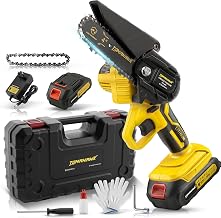


A good-value chainsaw is not necessarily the cheapest chainsaw on the market. For Indian buyers, value is better judged by the balance between cutting performance, build quality, safety features, ease of maintenance, running costs, replacement parts, and suitability for the work you actually intend to do. A compact saw that is ideal for pruning branches may be a poor choice for cutting large hardwood logs, while a powerful petrol chainsaw can be unnecessarily expensive and difficult to manage for occasional garden work.
Before comparing individual models, identify the type of cutting you expect to perform. Occasional pruning, cutting small branches, preparing firewood, clearing fallen limbs, farm maintenance, and heavier wood cutting each place different demands on the machine. The right specification is therefore the one that matches the workload rather than the one with the largest engine or longest guide bar.
Value should be considered over the entire ownership period rather than only at checkout. A chainsaw with a lower purchase price can become less economical if it has difficult starting, high fuel consumption, expensive replacement components, limited service support, or a chain and bar combination that is difficult to source.
The power source is one of the most important buying decisions. There is no universally superior format because each type is designed around a different combination of mobility, cutting demand, noise, maintenance, and operating environment.
Petrol chainsaws remain relevant for users who need substantial cutting power and freedom from electrical cables. They are particularly useful for outdoor work where access to mains electricity is inconvenient. They can also be suitable for demanding farm and firewood applications when the correct engine size and bar length are selected.
The disadvantages include fuel handling, engine maintenance, starting procedures, exhaust emissions, noise, vibration, and the need to maintain a correctly prepared fuel system. Buyers should also check the manufacturer's fuel and oil requirements rather than assuming that every two-stroke chainsaw uses exactly the same preparation or ratio.
Corded electric chainsaws can make sense for homeowners who work close to a suitable electrical outlet. They generally avoid petrol-engine maintenance and can be convenient for pruning, garden cleanup, and smaller cutting jobs within the practical reach of the cable.
The main limitation is mobility. The extension lead must be suitable for the equipment, kept away from the cutting area, and managed carefully to prevent accidental damage. Outdoor electrical equipment should always be used in accordance with the manufacturer's electrical and safety requirements.
Battery-powered chainsaws are increasingly attractive for users who want cordless convenience without petrol-engine maintenance. They can be particularly useful for garden maintenance and intermittent cutting where portability and relatively simple operation are more important than prolonged heavy-duty work.
Battery performance depends on the battery capacity, motor design, chain condition, wood density, cutting technique, temperature, and workload. A buyer comparing cordless models should therefore consider the complete system rather than judging the saw body alone.
Compact pruning chainsaws can be useful for light branch cutting where a full-size chainsaw would be unnecessarily cumbersome. Their smaller dimensions can make them easier to carry, but compact size should never be interpreted as permission to ignore chainsaw safety practices.
These tools are best evaluated according to the maximum material they are designed to cut, their guarding arrangements, chain speed, battery system where applicable, and the manufacturer's intended use.
The guide bar is the long rail around which the chain travels. Its length is one of the specifications most frequently used to compare chainsaws, but it should not be treated as a simple measure of cutting power.
A longer guide bar can provide greater reach and cutting capacity, but it generally requires an appropriate amount of power to operate effectively. Pairing an unnecessarily long bar with an underpowered saw can make cutting slower and may place additional demands on the motor or engine.
For pruning and small garden work, a shorter bar may offer better maneuverability. Medium-length bars can provide a useful compromise for general property maintenance. Longer bars are generally more appropriate when the saw is specifically designed and powered for larger timber.
Specifications can be confusing because petrol and electric chainsaws are commonly described using different measurements. Petrol models may emphasize engine displacement and engine power, while corded and battery models may emphasize electrical ratings, battery voltage, motor type, or other manufacturer-defined performance information.
For petrol chainsaws, engine displacement is commonly expressed in cubic centimetres. Displacement can provide useful context when comparing engines within a product family, but it should not be treated as a standalone guarantee of cutting performance. Engine design, power delivery, chain configuration, bar length, and maintenance also influence real-world capability.
Electric chainsaws may be described using watts, volts, or other electrical specifications. Higher nominal electrical ratings do not automatically mean that one model will outperform another in every cutting situation. Motor efficiency, chain speed, control electronics, battery characteristics, and the complete cutting system also matter.
Chain speed describes how quickly the chain travels around the guide bar. It can influence cutting performance, but it should be considered alongside available power, chain sharpness, bar length, lubrication, and the type of wood being cut.
The chain is the component that actually cuts the wood, so its condition and configuration have a major effect on performance. A powerful chainsaw fitted with a dull or incorrectly tensioned chain can perform poorly, consume more energy, and become more difficult to control.
Common chain characteristics include pitch, gauge, cutter configuration, and drive-link count. These dimensions must match the guide bar and sprocket. Never assume that any chain with a similar appearance will fit safely.
Proper chain lubrication reduces friction between the chain, guide bar, and sprocket. A functioning lubrication system is therefore an important part of chainsaw ownership rather than a minor convenience.
When comparing models, check whether the saw uses automatic chain oiling, whether oil flow can be adjusted, how easy the reservoir is to fill, and whether the manufacturer specifies a particular type of chain lubricant. Do not confuse chain oil with petrol-engine fuel or engine oil.
Regularly inspect the oil reservoir, bar groove, oil passage, and surrounding area for contamination. Sawdust and debris can interfere with lubrication, especially when the machine is used heavily.
Safety equipment should be treated as a fundamental buying criterion. A chainsaw is a high-speed cutting machine capable of causing severe injury, so price comparisons should never take precedence over appropriate safety features and safe operating practices.
Safety features do not make a chainsaw risk-free. Operators should read the model-specific manual, understand the correct starting and cutting procedures, keep bystanders away from the work area, and use appropriate protective equipment.
A chainsaw should not be evaluated as an isolated purchase. Appropriate protective equipment is part of the overall cost and safety planning.
Protective equipment should be selected according to applicable safety standards, the work being performed, and manufacturer recommendations. Ordinary clothing should not be assumed to provide chainsaw protection.
Kickback occurs when the moving chain near the upper portion of the guide-bar nose contacts an object or becomes pinched in a particular way, causing the guide bar to move rapidly toward the operator. It is one of the most important hazards associated with chainsaw use.
Buyers should therefore consider chain-brake design, front hand protection, chain configuration, operator visibility, balance, and the manufacturer's safety guidance. More importantly, operators need to understand which part of the bar is being used during each cut and avoid unsafe cutting positions.
Do not use a chainsaw beyond your training or experience level. Tree felling, cutting tensioned or spring-loaded branches, working at height, and removing damaged trees can involve hazards that require specialist knowledge and equipment.
Two chainsaws with similar headline power can feel very different during use. Weight distribution is especially important because the operator must control the machine while maintaining a stable stance and managing the forces generated during cutting.
When comparing a value-oriented chainsaw, look beyond the listed dry weight. A petrol machine may gain additional weight after fluids are added, while a cordless machine's practical weight includes the battery. The location of the battery, fuel tank, motor, and guide bar also affects balance.
Regular maintenance is essential for preserving cutting performance and safe operation. Maintenance requirements vary by model, so the owner's manual should always take precedence over generic advice.
A sharp chain normally produces appropriately sized chips when the saw is operated correctly. A dull chain may instead produce fine dust, require excessive pressure, cut slowly, or cause the machine to behave differently from normal.
Do not compensate for a dull chain by forcing the chainsaw harder into the wood. The correct response is to stop, inspect the chain, and sharpen or replace it according to the manufacturer's specifications and the condition of the cutters.
Regular sharpening can be one of the most effective ways to preserve the value of a chainsaw because cutting performance depends heavily on chain condition rather than the machine's headline specifications alone.
The lowest initial price does not necessarily represent the lowest total cost of ownership. Consider replacement chains, guide bars, batteries, chargers, fuel-related requirements, maintenance, and service arrangements before making a final comparison.
A large petrol chainsaw can be excessive for occasional pruning. Extra weight and complexity may make light work less comfortable. Select a machine according to the intended workload rather than buying the largest specification available.
Chains must match the saw's bar, sprocket, pitch, gauge, and drive-link requirements. Confirm the exact specification before purchasing replacements.
A chainsaw is a consumable-system product. Chains wear, guide bars can require replacement, and other components may eventually need servicing. Check whether compatible replacement parts can be identified and obtained in your area.
Battery voltage is only one part of a cordless chainsaw's specification. Battery capacity, motor design, chain speed, efficiency, workload, and the condition of the cutting system also influence practical performance.
A longer bar can increase reach but may reduce practicality when paired with a machine that is not designed to drive it effectively. Follow the manufacturer's approved combinations.
Budgeting only for the chainsaw itself can lead to an incomplete purchase decision. Appropriate protective equipment and training should be included when calculating the real cost of ownership.
Brand reputation can be useful, but it should not replace model-by-model comparison. Established manufacturers offer different ranges for homeowners, landscapers, forestry applications, construction-related work, and other uses. The best choice depends on the specific model rather than the logo alone.
When considering any brand, verify the exact model number, included accessories, warranty terms stated by the manufacturer or retailer, replacement-part availability, and applicable service arrangements before purchasing.
A specification table becomes much more useful when every model is compared against the same criteria. Instead of focusing on one headline number, assess the entire cutting system.
A compact electric or battery-powered chainsaw can be a practical format when the work involves smaller branches and periodic garden cleanup. Low-maintenance operation and easy storage may be more valuable than maximum cutting capacity.
A lighter, shorter-bar design can provide useful maneuverability for suitable ground-level pruning work. Always follow the manufacturer's intended-use limitations and avoid attempting hazardous tree work without appropriate training.
Firewood cutting can place greater demands on a chainsaw than occasional pruning. Consider sustained cutting capability, cooling, chain durability, bar length, operator ergonomics, and the availability of replacement chains.
Users managing larger properties may prioritize mobility, reliability, fuel or battery runtime, serviceability, and the ability to handle varied cutting tasks. A petrol model may be appropriate for some demanding applications, while a cordless model may be more convenient for lighter intermittent work.
Large timber requires an appropriately powered professional-grade machine, correct bar and chain configuration, suitable protective equipment, and competent operating technique. Buyers should not use a homeowner-oriented saw simply because it has a comparatively low purchase price.
When checking prices from Indian retailers, compare equivalent packages. One cordless chainsaw may include a battery and charger while another may be sold as a tool-only package. A petrol chainsaw may have different included accessories or consumables. Comparing headline prices without checking the box contents can produce a misleading value assessment.
Online shopping can make it easier to compare specifications and customer feedback, but product listings should be checked carefully. Marketplace titles can sometimes simplify technical information, so verify important specifications against the manufacturer's documentation whenever possible.
Customer reviews can reveal useful information about setup, ergonomics, battery runtime, starting behavior, packaging, and long-term convenience, but reviews should not be treated as controlled product testing.
Look for recurring observations rather than relying on one extremely positive or negative review. Reviews that identify the exact model, workload, material being cut, and duration of use generally provide more useful context than vague statements about whether a product is “powerful.”
Storage conditions can affect equipment longevity, particularly in regions exposed to high humidity, heat, dust, or seasonal rainfall. Store the chainsaw according to the manufacturer's instructions and keep it protected from unnecessary moisture and contamination.
Petrol-powered machines require particular attention to fuel-storage procedures, while cordless equipment requires appropriate battery-storage practices. Never improvise storage procedures for lithium-ion batteries or fuel systems; follow the instructions supplied for the specific product.
Some jobs carry significantly greater risk than ordinary ground-level cutting. Removing large trees, cutting branches under tension, dealing with storm-damaged trees, working near electrical lines, cutting while positioned on a ladder, or performing tree work at height can introduce hazards that are difficult to manage safely without specialist training.
For these situations, the appropriate buying decision may be to hire a qualified professional rather than purchase a more powerful chainsaw. A bigger machine does not compensate for insufficient training or an unsafe work environment.
Performance is not determined solely by the motor or engine. Correct maintenance and technique can have a substantial influence on how efficiently a chainsaw cuts.
The best-value chainsaw depends on the intended application, cutting diameter, frequency of use, preferred power source, budget, and access to replacement parts and service. A compact cordless model may offer better value for light garden work, while a petrol machine may be more appropriate for demanding outdoor cutting.
For suitable light and medium-duty applications, a battery chainsaw can be a convenient option. Whether it is sufficient depends on the size and type of material, workload, battery capacity, and the manufacturer's intended use. It should not automatically be substituted for a professional machine in demanding timber or tree work.
Neither category is universally better. Petrol chainsaws can provide strong mobility and sustained performance for demanding applications, while electric and battery models can offer simpler operation and reduced engine-related maintenance. Choose according to the work rather than the power source alone.
Choose the bar length recommended for the specific chainsaw and appropriate for the diameter of material you intend to cut. A longer bar is useful only when the saw has sufficient power and is designed to operate with that configuration.
Chain sharpness is extremely important. A dull chain can cut slowly and may encourage the operator to apply excessive force. Regular inspection and correct sharpening or replacement help maintain appropriate cutting performance.
No. A more expensive machine may offer capabilities that are unnecessary for a homeowner performing occasional pruning. Value comes from choosing the appropriate combination of power, durability, ergonomics, safety, maintenance requirements, and ownership costs.
Depending on the intended application, buyers may compare models from established manufacturers such as STIHL, Husqvarna, Makita, Bosch, Black+Decker, and DEWALT. The exact model specification, intended use, service arrangements, and replacement-part availability should be checked before choosing.
No. A replacement chain must match the chainsaw's required pitch, gauge, drive-link count, and compatible sprocket and bar configuration. Always verify the manufacturer's specification before purchasing or installing a replacement chain.
There is no single interval that applies to every user. Sharpening frequency depends on cutting volume, wood type, contact with dirt or foreign objects, chain type, and operating technique. Inspect the chain regularly and sharpen it when its cutting performance and cutter condition indicate that maintenance is required.
Consider appropriate power, guide-bar length, chain availability, chain lubrication, durability, balance, weight, maintenance access, and the diameter and species of wood involved. A model intended for light pruning should not be selected simply because its price is attractive.
Before making a purchase, compare the complete product specification and ownership requirements rather than relying on a single rating or headline feature.
The strongest value proposition is the chainsaw that does the required work safely and efficiently without adding unnecessary cost, weight, maintenance, or complexity. For light garden maintenance, convenience and maneuverability can be more important than maximum power. For regular firewood or property work, cutting capacity, durability, serviceability, and replacement-part availability become increasingly important.
When comparing the top chainsaw options for India in 2026, treat the product ranking as a starting point for commercial research rather than a substitute for checking the exact model specification. Compare current retailer pricing, included accessories, verified customer feedback, manufacturer documentation, warranty conditions, replacement components, and local service arrangements before making a final decision.
Most importantly, buy according to the work you genuinely need to perform. A correctly sized, well-maintained chainsaw with appropriate safety equipment is generally a better value choice than an unnecessarily powerful machine selected purely because its specification appears impressive.