

♥ Wishlist
Compare 46 verified Best Die Grinder for Precision Grinding and Polishing products in India. Reviews, ratings, pros, cons and buying advice updated for October 2026.


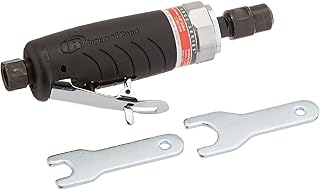


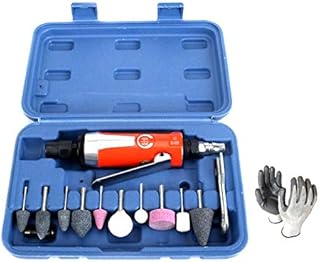


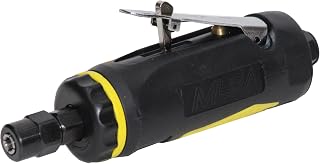
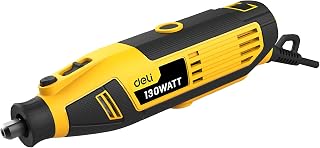


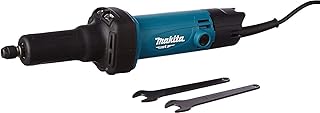


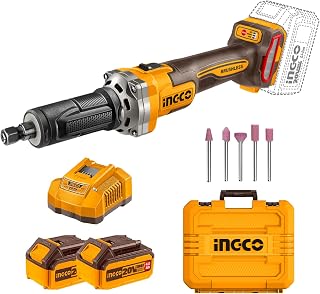


A good-value die grinder is not simply the cheapest grinder available. For Indian buyers, value is better judged by the balance between motor performance, usable speed, collet compatibility, handling, durability, serviceability, accessories, electrical compatibility and the type of grinding work you actually intend to perform. A compact tool that is excellent for light deburring may be a poor choice for prolonged workshop grinding, while a high-powered professional model can be unnecessary for occasional DIY work.
This guide is designed to help you compare die grinders on the factors that matter before buying. Rather than choosing only by wattage or advertised RPM, consider how the tool will be used, which accessories it accepts, how much control it provides and whether the specification matches your application.
A die grinder is a compact, high-speed rotary power tool designed for precision grinding, deburring, polishing, cleaning, shaping and finishing. Unlike a conventional angle grinder, it normally uses a small collet to hold accessories with a compatible shank. This makes it particularly useful for detailed work in areas where a larger grinder cannot reach comfortably.
Die grinders are commonly used for metal fabrication, automotive repair, weld finishing, tool and die work, surface preparation, rust removal, polishing, sharpening and general workshop maintenance. Depending on the attachment, a die grinder can work with mounted grinding points, carbide burrs, sanding accessories, polishing tools, wire brushes and other compatible rotary accessories.
For buyers in India, the most important distinction is between a tool intended for occasional precision work and one designed for demanding workshop use. Motor power, speed control, thermal management and construction become increasingly important as working time and material-removal demands increase.
A die grinder and angle grinder can both remove material, but they are designed for different types of work.
If your main requirement is cutting steel bars, masonry or large sheet material, a die grinder is usually not the first tool to consider. If the job involves removing weld imperfections, cleaning casting edges, opening up tight areas or performing detailed finishing, a die grinder can be much more appropriate.
Motor wattage is one of the most visible specifications, but it should not be treated as a direct measure of overall tool quality. A higher wattage can indicate greater potential for sustained material removal, but actual performance also depends on motor design, gearing, cooling, speed, efficiency and the accessory being used.
For occasional light-duty work, a compact lower-powered die grinder can be sufficient. For regular workshop use, a stronger motor may provide better performance under load. Professional users should look beyond the headline wattage and examine the complete specification sheet.
RPM indicates how fast the spindle rotates without load. Die grinders are high-speed tools, and some models operate at approximately 25,000 RPM or higher. High speed is useful for small grinding and finishing accessories, but maximum RPM should never be treated as automatically better.
The correct operating speed depends on the accessory, diameter, material and manufacturer's instructions. Using an accessory at an unsuitable speed can increase the risk of damage, loss of control or accessory failure.
For example, a compact Makita GD0600 is specified at 400W and 25,000 RPM, while Makita's higher-powered GD0801C provides variable speed from 7,000 to 29,000 RPM. These specifications illustrate why application-specific speed control can be more useful than simply choosing the model with the highest advertised RPM.
Variable speed can be particularly valuable if you intend to use the grinder for different materials and accessories. Lower speeds can provide greater control for certain finishing and polishing tasks, while higher speeds can be appropriate for accessories designed for rapid grinding.
A fixed-speed die grinder can still be an excellent value when the intended work is consistent. If you expect to change between grinding, polishing, sanding and other operations, variable speed becomes considerably more attractive.
The collet determines which accessory shanks the tool can securely accept. Common specifications include 6 mm, 8 mm and 1/4-inch configurations, although exact compatibility varies between models.
Do not assume that every 1/4-inch accessory is interchangeable with every die grinder. Check the tool's specified collet capacity and make sure the accessory shank corresponds exactly to the required size.
Some models support multiple collet sizes, which can make them more versatile. The Makita GD0600, for example, is specified for 3 mm and 6 mm collets, while other models in the same manufacturer's range use larger 8 mm capacities.
Maximum accessory diameter is another specification that should be checked carefully. A grinder designed for a particular maximum wheel or accessory diameter should not be fitted with an oversized attachment simply because the shank physically fits.
Always follow the tool and accessory manufacturer's maximum diameter and speed requirements. The larger the rotating accessory, the greater the potential peripheral speed and mechanical load.
A lightweight die grinder can be easier to control during detailed work and can reduce fatigue during repetitive tasks. However, the lightest tool is not necessarily the best choice for continuous heavy-duty use.
Consider how the tool will actually be held. A compact body can be advantageous when working inside engine compartments, narrow fabrication areas or around complex components. A longer body can sometimes provide a different balance and grip position.
The collet is a critical component because it holds the rotating accessory. A properly fitted accessory should sit securely and concentrically in the collet. Poor fitting, incorrect shank size or inadequate tightening can create vibration and reduce control.
When comparing value-oriented die grinders, examine whether replacement collets and compatible accessories are realistically available in the Indian market. A low initial purchase price becomes less attractive if essential replacement components are difficult to source.
Corded models remain attractive for workshops where continuous access to mains electricity is available. They eliminate battery runtime concerns and can be practical when the tool is used repeatedly at a fixed workstation.
A corded model can be especially sensible when value is the priority and portability is not essential. Models such as the Makita GD0600 and GD0602 illustrate the compact corded format commonly used for workshop grinding and finishing applications.
Cordless die grinders provide greater mobility and eliminate the need to manage a power cable around the workpiece. They can be particularly convenient for automotive work, installation jobs and workshops where the operator moves frequently between work areas.
The trade-off is the additional cost of batteries and chargers when they are not already part of the user's tool platform. Battery capacity, charging time, total system weight and compatibility with an existing battery ecosystem should therefore be included in the buying decision.
Makita's Indian range includes cordless die grinders such as the DGD800, DGD801 and newer 40V-class models. These demonstrate how cordless options can span from relatively compact professional equipment to higher-performance platforms.
Fixed-speed models are generally straightforward and can be excellent for users performing one or two repetitive operations. Their simplicity can also make them attractive when the objective is to buy a reliable tool for a specific workshop task.
Variable-speed models offer greater flexibility. They can allow the operator to adjust the tool to the accessory and workpiece rather than running everything at maximum speed.
More advanced die grinders may include electronic features intended to improve controllability and protection.
These features can make a meaningful difference for professional users, but they should be evaluated alongside the overall construction and intended workload rather than treated as reasons by themselves to pay more.
Grinding generates abrasive particles that can enter ventilation openings and potentially affect internal components. This makes motor protection particularly relevant in metalworking environments.
Some professional die grinders use protective construction around the motor, bearings and gearing. Makita, for example, describes labyrinth construction on its GD0801C as a means of helping prevent debris from entering critical internal areas.
For buyers working in dusty workshops, foundries, fabrication environments or areas with significant grinding residue, internal protection and regular cleaning deserve more attention than cosmetic features.
High-speed rotary tools naturally produce noise and vibration. Even if a die grinder feels comfortable during a short task, repeated use can become tiring if vibration and grip characteristics are poor.
When comparing specifications, look for published noise and vibration information where available. Remember that laboratory or declared figures do not necessarily represent the exact conditions of every job because accessory selection, material, pressure and operating technique can affect real-world exposure.
Appropriate hearing protection, eye protection and other personal protective equipment should be selected according to the job and workplace risk assessment.
The tool itself is only part of the system. Accessory selection has a major effect on what a die grinder can actually accomplish.
Mounted stones are commonly used for grinding and shaping metal. They are available in different shapes and abrasive specifications, allowing the user to work on edges, grooves, contours and difficult-to-reach areas.
Carbide burrs are useful for aggressive material removal, profiling and deburring compatible metals. They are available in different shapes, including cylindrical, ball, flame, tree and pointed profiles.
These can be useful for smoothing surfaces and blending edges. The appropriate abrasive grade depends on whether the goal is material removal, surface preparation or finishing.
Wire brushes can be useful for removing loose rust, scale and surface contamination. Their compatibility, maximum RPM and intended material should always be checked before use.
Some die grinders can be used for polishing applications with compatible accessories. However, polishing generally benefits from appropriate speed control because the ideal operating conditions may differ from aggressive grinding.
Prioritise manageable weight, straightforward controls, adequate power and reasonable accessory compatibility. There is little advantage in paying for advanced professional electronics if the tool will only be used a few times each year.
Compact dimensions and controllability can be more important than maximum motor power. A die grinder may be used around engine components, brackets, welds, rusted areas and confined spaces, making body shape and access particularly important.
Frequent grinding and deburring place greater demands on durability and motor performance. A professional model with stronger construction, better cooling and suitable overload protection may offer better long-term value even if its purchase price is higher.
Look for a grinder that can accept suitable mounted stones, carbide burrs and abrasive accessories. Good handling is especially important when blending welds because excessive pressure or poor control can damage the surrounding material.
Precision and controllability are critical. Variable speed, compact dimensions, low vibration and a suitable range of small accessories can be more important than raw wattage.
Prioritise motor durability, thermal management, electronic protection, serviceability and availability of replacement components. A professional die grinder should be evaluated as a long-term workshop tool rather than simply as a low-cost purchase.
The cheapest die grinder can become an expensive choice if it lacks the specifications, accessories or durability required for the job. Conversely, buying a premium professional model for occasional light work can result in spending more than necessary.
A practical value assessment should consider:
For this reason, a moderately priced professional-grade tool can sometimes represent better value than a cheaper consumer model, while a simple entry-level model can be the better purchase for a user who only needs occasional light-duty work.
When researching die grinders in the Indian market, compare established power-tool manufacturers alongside reputable specialist tool brands. Brand reputation should not replace specification-based comparison, but established manufacturers can provide useful information about product ranges, accessories and replacement components.
Before selecting any brand, compare the exact model rather than assuming every product within a brand has the same level of performance or durability.
When two models appear similar, use a specification-by-specification comparison instead of focusing on the headline price.
A high wattage figure does not automatically mean a tool is better for your application. Consider the entire specification and the type of accessory you intend to use.
Maximum RPM is not a universal performance score. Accessories have their own operating limits, and excessive speed can be inappropriate for particular applications.
Buying a grinder without checking accessory compatibility can leave you with limited choices or require additional components.
A powerful professional grinder can be unnecessary for occasional deburring or small finishing jobs. Excess weight and size may make detailed work harder rather than easier.
A low-cost compact model may not be appropriate for prolonged heavy material removal. Match the tool to the expected workload.
A die grinder's usefulness depends heavily on compatible accessories. Include the cost and availability of suitable burrs, stones, sanding tools and other attachments when calculating overall value.
Brushes, collets and other wear components may eventually need replacement. Before buying, consider whether the exact model has a practical parts and service ecosystem in India.
Accessory dimensions, maximum operating speeds and intended applications vary. Always verify compatibility instead of assuming that a physically fitting accessory is automatically safe.
Die grinders operate at very high rotational speeds, so safe operating practices are essential. Read the instruction manual for the specific model and follow the accessory manufacturer's requirements.
A common mistake is to assume that a grinder's maximum RPM is also the correct RPM for every accessory. It is not. Grinding wheels, mounted points, burrs, brushes and polishing accessories can have different speed requirements.
The accessory must be rated for the intended rotational speed. If an accessory has a lower maximum speed than the grinder's no-load RPM, operating it at full speed can be unsafe.
This is one of the strongest arguments for variable-speed control when the grinder will be used with a broad range of accessories.
Routine maintenance can help preserve performance and reduce avoidable wear. Maintenance requirements vary by model, so the manufacturer's manual should always take priority.
Overheating can occur when a tool is overloaded, operated continuously beyond its intended duty conditions or used with an inappropriate accessory.
Use reasonable pressure rather than forcing the tool through the workpiece. Let the accessory perform the cutting or grinding action. Excessive pressure can increase heat generation, reduce accessory life and place additional load on the motor.
For demanding applications, a professional model with appropriate motor protection and cooling characteristics may be a better investment than a basic model operated beyond its intended workload.
Buying a capable tool is only part of achieving good value. Using the correct accessory for each task can make a larger difference than moving to a more expensive grinder.
For example, a carbide burr may be more appropriate for controlled material removal than repeatedly using an unsuitable abrasive point. Similarly, a finishing accessory can produce a better surface result than trying to achieve the same finish with an aggressive grinding attachment.
Store accessories properly, avoid dropping precision components, keep the collet clean and use the correct accessory speed. These habits can improve both tool performance and accessory life.
Paying more can make sense when the grinder will be used frequently or when downtime is costly. Professional users may benefit from better electronic control, stronger motors, improved protection against workshop debris, more sophisticated speed management and better compatibility with an established tool ecosystem.
Premium pricing is harder to justify when the grinder will only be used for occasional light work. In that situation, a dependable basic model with the correct collet and adequate performance may deliver better overall value.
A budget-oriented model can be a sensible choice for occasional home workshop use, basic deburring, small repair jobs and infrequent finishing tasks. The key is to select a model whose specifications genuinely match the work rather than choosing purely on purchase price.
Before choosing an inexpensive grinder, check the motor specification, RPM, collet size, accessory compatibility, weight, switch design and availability of replacement components. A modest tool with clearly documented specifications can be preferable to an inexpensive product with limited technical information.
Customer reviews can provide useful information, but they should be interpreted carefully. The most helpful reviews are those that explain how the tool was used and what type of material and workload were involved.
Online marketplaces can contain multiple variants of what appears to be the same grinder. Always verify the exact model number, voltage, included accessories, collet configuration and whether the listing is for a bare tool or a complete kit.
Product photographs can sometimes look nearly identical across variants. The technical specification and exact model identifier are more reliable for comparison than the appearance of the tool alone.
Before purchasing, compare the current listing information with the manufacturer's specification where possible, and check the seller information, return conditions and current customer feedback through the retailer you intend to use.
There is no single best die grinder for every buyer. The right choice depends on the intended material, workload, required accessory size, desired RPM, portability and budget. For occasional work, a compact model may offer the best value, while professional users may benefit from stronger motors and advanced electronic features.
A 400W model can be sufficient for many grinding, deburring and finishing applications when used with appropriate accessories. Whether it is enough depends on the material, pressure, duration of use and amount of material you need to remove.
Not necessarily. High RPM can be useful for certain small accessories, but the correct speed depends on the accessory and application. Always stay within the accessory's rated operating speed.
Yes. Die grinders are commonly suitable for detailed weld finishing and deburring when fitted with an appropriate grinding point, burr or abrasive accessory. For large welds or rapid removal over broad surfaces, a larger grinder may be more efficient.
Some die grinders can be used for polishing with compatible accessories. A variable-speed model can be especially useful when the required polishing speed differs from the tool's maximum speed.
Choose the collet according to the accessories you intend to use. Common sizes include 6 mm, 8 mm and 1/4 inch, but compatibility varies between models. Check the exact specification before buying.
They can be worthwhile when portability and freedom from a power cable are important. They are especially attractive if you already own compatible batteries and chargers. For fixed workshop use, a corded model may provide better value.
Makita offers multiple die grinder models covering light, professional and cordless applications. However, suitability depends on the exact model. Compare its motor rating, RPM, collet, dimensions, protection features and intended workload against your requirements.
Check the exact model number, voltage, motor power, RPM, collet size, maximum accessory diameter, weight, included accessories and whether the listing is a bare tool or complete kit. Also compare current customer feedback and verify the specifications against reliable manufacturer information.
There is no universal operating time that applies to every die grinder. Duty cycle depends on the model, workload, accessory, material, ambient conditions and manufacturer's instructions. Follow the specific manual rather than assuming that a particular wattage allows unlimited continuous operation.
If you use different accessories or work with different materials, variable speed can provide valuable flexibility. If you perform one repetitive task using an accessory designed for the grinder's fixed operating speed, a fixed-speed model may provide sufficient value.
The best value die grinder for 2026 is the one whose specifications match your actual workload without paying for capabilities you will rarely use. Start with the application, then work backward to the required accessory, collet, speed range, motor capacity and tool format.
For light and occasional work, prioritise manageable size, dependable construction and accessory compatibility. For professional fabrication, automotive repair or repeated grinding, place greater emphasis on motor performance, thermal management, electronic protection, ergonomics and serviceability. If mobility is important, compare cordless systems based on the complete battery-and-charger ecosystem rather than the bare tool price alone.
Models from established manufacturers such as Makita, Bosch Professional, DeWalt and Stanley are useful reference points when comparing specifications, but the exact model remains more important than the brand name. Always compare current specifications, accessory requirements and customer feedback before making the final purchase decision.
Most importantly, do not choose a die grinder solely because it has the highest RPM, highest wattage or lowest price. A properly matched tool, accessory and operating speed will generally provide a safer, more useful and more economical solution for the job.