

♥ Wishlist
Compare 20 verified Water Purifier for Clean and Safe Drinking Water products in India. Reviews, ratings, pros, cons and buying advice updated for October 2026.


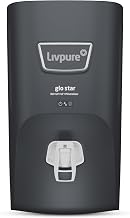


Choosing the right water purifier for an Indian home requires more than comparing brand names or promotional features. Water quality varies significantly across different regions of India, with households facing challenges such as high Total Dissolved Solids (TDS), hardness, microbial contamination, excess minerals, and ageing municipal water infrastructure. A good value water purifier should provide reliable purification performance, practical features, reasonable maintenance requirements, and long-term ownership value.
This comprehensive buying guide explores the important factors to consider when selecting the best value water purifier in India for 2026. It covers purification technologies, filter systems, storage capacity, maintenance costs, suitable applications, and trusted brands including Kent, Aquaguard, Livpure, Pureit, AO Smith, Havells, Faber, and Blue Star. The goal is to help buyers compare options intelligently and choose a purifier that matches their water source, family size, and budget.
The best-value water purifier is not always the cheapest model available. Value comes from balancing purification quality, durability, operating cost, replacement filter availability, and features that genuinely improve everyday usage.
Before buying a water purifier, Indian consumers should evaluate:
Modern water purifiers combine multiple technologies to address different types of contamination. Understanding these technologies helps buyers avoid paying for unnecessary features or choosing a purifier unsuitable for their water source.
Reverse Osmosis (RO) technology is commonly used in Indian households where water contains high TDS levels, dissolved salts, heavy metals, or hardness-causing minerals. RO filtration uses a semi-permeable membrane to remove dissolved impurities.
RO purifiers are generally suitable for:
However, RO systems may reject some amount of water during purification. Buyers should consider models with better water recovery efficiency and useful water-saving features.
Ultraviolet (UV) technology uses ultraviolet light to deactivate bacteria, viruses, and other microorganisms. UV purification is useful when the primary concern is microbial contamination rather than dissolved solids.
UV-based systems are commonly considered suitable for treated municipal water supplies where TDS levels are already acceptable.
Ultrafiltration (UF) uses a fine membrane to remove suspended particles, dirt, and certain microorganisms. UF filtration does not usually reduce dissolved salts, making it different from RO purification.
Many advanced water purifiers combine RO, UV, and UF technologies to provide broader protection across different water conditions.
Many modern purifiers include mineraliser technology or TDS adjustment features designed to retain useful minerals while improving taste. These features can be valuable for households concerned about water taste after RO purification.
Consumers should understand that such features differ between brands and models. Instead of choosing purely based on marketing terms, buyers should examine the actual purification specifications and suitability for their water source.
Water purification speed is measured in litres per hour. Families with higher daily water consumption should consider models with faster purification performance.
A small household may find a standard purification rate sufficient, while larger families may benefit from higher-capacity models to avoid waiting during peak usage periods.
Storage capacity determines how much purified water is available instantly. Common household sizes include compact models suitable for smaller families and larger tanks designed for households with greater daily demand.
When comparing storage capacity, consider:
Filter replacement is one of the most important long-term ownership factors. A purifier with a low purchase price may become expensive if replacement filters are costly or require frequent servicing.
Before purchasing, compare:
Traditional RO systems can produce reject water during purification. In regions where water conservation is important, buyers should compare recovery rates and choose efficient models whenever possible.
Several established brands offer a wide range of water purifiers across different price segments. Buyers should compare individual models rather than selecting a brand only because of popularity.
Kent is one of India's widely recognised water purifier brands, known for RO-based purification systems and multiple filtration technologies. Many Kent models focus on combining RO, UV, UF, and TDS control features for Indian water conditions.
Kent products are often considered by buyers looking for established purification technology, broad model availability, and long-term familiarity in the Indian market.
Aquaguard from Eureka Forbes is another well-known name in Indian water purification. The brand offers solutions designed for different water sources, including municipal and high-TDS water conditions.
Consumers comparing Aquaguard models should examine purification stages, maintenance requirements, and features included in each model.
Livpure provides a range of water purifiers focused on modern designs, multiple purification technologies, and household convenience features. The brand offers options across different budgets.
Pureit, a brand from Hindustan Unilever, offers water purifiers designed for Indian households with emphasis on purification performance and usability.
AO Smith is known globally for water treatment solutions and offers premium water purifier models in India. Buyers interested in advanced features and premium build quality may consider comparing AO Smith models with other options.
Havells, Faber, and Blue Star also offer competitive water purifier options in India. These brands provide alternatives for buyers looking for modern designs, practical features, and different price ranges.
One of the most common mistakes is purchasing an RO purifier without understanding the incoming water quality. RO technology is highly useful for high-TDS water but may not always be necessary for every location.
Many buyers focus only on the initial purchase price. Long-term costs such as filter replacement, membrane replacement, and servicing can significantly affect overall value.
A purifier with insufficient storage capacity may create inconvenience for larger families. Buyers should estimate daily consumption before selecting tank size.
Smart indicators, digital displays, touch controls, and app connectivity can be useful, but they should not replace evaluation of core purification performance and reliability.
Regular maintenance helps maintain purification quality and extends the usable life of a water purifier.
Water quality differs across Indian states, cities, and neighbourhoods. A purifier suitable for one location may not provide the same value elsewhere.
Consider these factors:
Modern water purifiers increasingly include features such as filter change indicators, purification status displays, smart alerts, and improved energy efficiency.
While these features can improve convenience, buyers should prioritise purification capability, durability, and maintenance support before considering advanced technology features.
The best value water purifier depends on water quality, family size, budget, and maintenance expectations. A suitable model should provide reliable purification while keeping long-term ownership costs reasonable.
No. RO purification is most useful when water contains high dissolved solids or hardness. Homes with lower TDS municipal water may require different purification technologies.
Replacement schedules depend on usage, water quality, and purifier design. Buyers should follow manufacturer recommendations and monitor changes in performance.
Kent, Aquaguard, Livpure, Pureit, AO Smith, Havells, Faber, and Blue Star are among the recognised brands available in India. Buyers should compare specific models, specifications, and service availability before deciding.
The ideal capacity depends on the number of users and daily drinking water requirements. Larger families generally benefit from higher storage capacity and faster purification rates.
Selecting the best value water purifier in India for 2026 requires balancing purification technology, water quality requirements, operating expenses, and convenience features. Instead of choosing only by price or brand reputation, compare specifications carefully and select a model that matches your household conditions.
A well-chosen water purifier can provide reliable access to cleaner drinking water while reducing unnecessary maintenance expenses. Review current product specifications, compare customer feedback, check available service support, and choose the option that offers the strongest overall value for your needs.