

♥ Wishlist
Compare 50 verified Dining Room Furniture for Indian Homes products in India. Reviews, ratings, pros, cons and buying advice updated for October 2026.


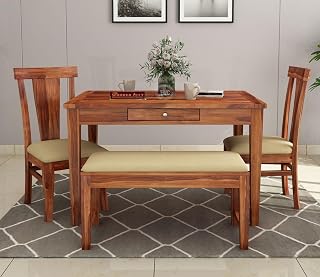


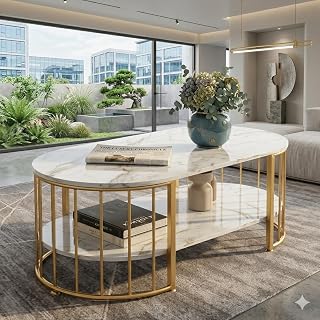


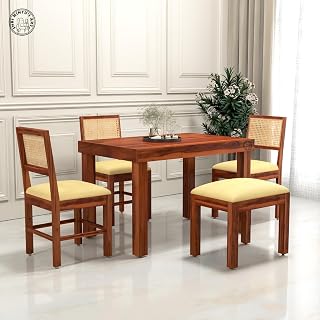

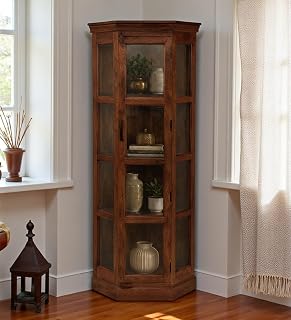


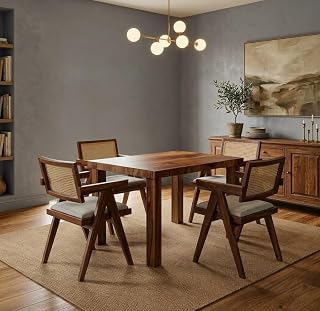


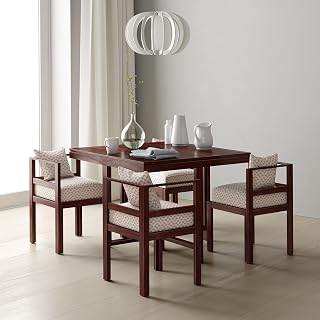


Finding genuinely good-value dining room furniture is not simply a matter of choosing the lowest-priced table or the set with the highest number of reviews. For Indian homes, value is better judged by the balance between construction quality, dimensions, seating comfort, material suitability, maintenance requirements, appearance, and the amount of usable furniture you receive for the space and budget available.
A dining set that looks attractive in product photographs can be unsuitable if the tabletop is too small for everyday meals, the chairs are uncomfortable for longer sitting, the overall footprint overwhelms a compact dining area, or the materials require more maintenance than expected. Conversely, a relatively simple dining table can be an excellent value purchase when its proportions, construction and finish match the household's actual needs.
This guide is designed for shoppers comparing dining tables, dining chairs and complete dining sets in India during 2026. It focuses on the factors that matter most during commercial research so that you can compare specifications rather than relying exclusively on photographs, promotional descriptions or headline discounts.
Good value means getting appropriate quality and functionality for the money spent. It does not necessarily mean buying the cheapest option. A dining table that costs less initially but needs frequent repairs or replacement may provide poorer long-term value than a better-constructed alternative.
Material choice has a direct effect on appearance, durability, weight, maintenance and price. There is no universally superior dining-table material because the best choice depends on how the table will be used.
Solid wood can provide a warm, substantial appearance and can work particularly well in dining rooms where the table is intended to be a long-term piece of furniture. However, shoppers should distinguish between different wood species and construction methods rather than treating every product described as “wooden” as equivalent.
When comparing solid-wood furniture, examine the stated wood species, tabletop construction, frame construction, finish and care instructions. Wood can also respond to changes in humidity and temperature, so appropriate placement and maintenance remain important.
Engineered wood products can make dining furniture more accessible and allow manufacturers to create consistent finishes and contemporary designs. They can be particularly practical for budget-conscious households and modern apartments.
Do not judge engineered wood furniture solely by appearance. Look at the board specification where provided, edge treatment, thickness, supporting structure, hardware and manufacturer assembly instructions. Areas exposed to repeated moisture deserve particular attention because not every engineered-board product has the same resistance to water.
Metal frames can provide a clean contemporary appearance and can be useful when buyers want a combination of structural support and a relatively minimalist visual design. Metal is commonly paired with wood-look, glass or engineered tabletops.
Check the construction of the joints and frame, the finish used on exposed metal and the relationship between the tabletop and supporting frame. A lightweight appearance does not automatically indicate poor construction, but a table should remain stable during normal use.
Glass can make a dining area feel visually lighter and may work well in smaller rooms because the transparent surface can reduce the visual bulk of the furniture. It also requires a cleaning routine that keeps fingerprints, food marks and dust under control.
Buyers should pay attention to the stated glass type and thickness where the specification is provided, as well as the supporting frame and safety-related product information. Avoid assuming that every glass dining table has identical construction.
Plastic and polymer furniture can be useful when portability, easy cleaning and affordability are priorities. It may suit utility dining areas, smaller homes, temporary setups or households that frequently rearrange furniture.
The important comparison points are rigidity, load specifications where supplied, chair geometry, UV suitability for outdoor applications, finish quality and the manufacturer's care instructions.
A dining table may receive most of the attention during shopping, but chairs determine how comfortable the dining experience feels. A visually impressive set can still be poor value if the chairs are uncomfortable after a relatively short period.
Dining furniture needs more space than the tabletop dimensions alone suggest. Chairs must be pulled out, people need room to sit and stand, and walking routes should remain usable.
Two-person dining tables can be a sensible choice for studio apartments, compact kitchens and homes where the dining area has limited floor space. They can also work as multifunctional surfaces for breakfast, coffee or occasional work.
A four-seater is often a practical middle ground for couples and small families. Square, rectangular and round formats can provide different advantages depending on the room layout.
A rectangular four-seater can work well against or near a wall when circulation space is limited, while a round table can improve movement around a compact dining zone by eliminating sharp corners.
A six-seater is useful for families that regularly eat together or frequently host guests. Before choosing one, measure the available floor area and consider the full footprint with chairs pulled out.
Larger dining furniture can become the visual and physical centre of a room. It is best suited to households with sufficient floor space and a genuine need for additional seating. Buying a large table merely because it appears more substantial can reduce circulation and make the room less functional.
The shape of a dining table affects both seating flexibility and room circulation.
Compact apartments require a different approach to value. The objective is not to fit the largest possible table into the room, but to maximize usable dining capacity without sacrificing circulation.
For larger households, seating capacity and structural stability become more important than purely decorative features. Count the people who use the table every day rather than relying on an advertised seating number alone.
Also consider how serving dishes are placed. A table may technically seat six people but provide limited usable space once plates, serving bowls and glasses are on the surface. A slightly larger tabletop can sometimes provide substantially better everyday usability.
Complete dining sets are convenient because the table and chairs are designed to coordinate visually. They can also simplify the process of matching proportions and finishes.
However, buying individual pieces can offer greater flexibility. A household might prefer a particular table but want chairs with deeper cushioning, a different backrest shape or a more washable upholstery material.
Brand familiarity can make research easier, but a recognised name should not replace specification-level comparison. Product ranges can vary considerably within the same brand.
When comparing these or other brands, evaluate the individual product rather than assuming every model offers the same construction quality, material specification or after-sales terms.
Product specifications are more useful than marketing adjectives. Terms such as “premium,” “luxury,” “strong,” “modern” or “durable” should be treated as descriptive claims rather than substitutes for measurable information.
The finish affects both appearance and everyday maintenance. Glossy surfaces can create a contemporary appearance but may make fingerprints and dust more visible. Matte finishes can be more understated, while textured surfaces may hide minor marks but can require more effort to clean.
Wood-look finishes can provide the appearance of timber without necessarily using solid wood throughout the product. Always check the actual material specification rather than interpreting the visual finish as evidence of construction material.
India's varied climate means furniture can encounter humidity, heat, dust and seasonal changes depending on location. Furniture selection should therefore account for the environment in which it will be placed.
In humid environments, moisture management becomes especially important. Avoid prolonged exposure to standing water and follow the manufacturer's cleaning and care instructions. For air-conditioned interiors, normal indoor conditions may be easier to manage, but spills and cleaning practices remain important regardless of climate.
For homes with children, pets or frequent guests, practical cleanability can be more valuable than a delicate decorative finish. A surface that tolerates normal household cleaning is often easier to live with than one that requires unusually careful treatment.
Flat-packed furniture can be convenient to transport, but assembly quality can influence stability. Before purchasing, check what assembly is required and whether the product listing clearly explains the process.
Online shoppers cannot physically shake or sit on furniture before purchase, so the available specifications and photographs deserve closer attention.
Look for a clearly supported tabletop, appropriately positioned legs, rigid frame connections and a design that does not appear unnecessarily top-heavy. For chairs, examine how the legs connect to the seat and backrest and whether the construction appears symmetrical and adequately supported.
Customer feedback can add useful information about assembly, stability and real-world use, but individual reviews should not be treated as conclusive evidence. Look for repeated patterns across multiple customer experiences rather than giving disproportionate weight to one unusually positive or negative comment.
Photographs are useful for evaluating style but cannot establish every aspect of construction. Always check dimensions, material specifications and assembly information before making a decision.
A table can be correctly sized while its chairs are uncomfortable. Compare seat height, width, depth and backrest design whenever these specifications are available.
More seats are not always better. A large table can restrict movement and make cleaning or serving more difficult. Measure the room and visualize the chair positions before deciding.
Price reflects many factors, including design, materials, manufacturing, branding and distribution. It should not be treated as a direct measurement of durability.
A table can fit perfectly inside a dining room yet be difficult to move through a narrow entrance or staircase. Check product and package dimensions where available.
A high-maintenance surface may become frustrating in a busy household. Compare cleaning requirements before choosing a particular finish or upholstery.
A large displayed discount does not automatically make a product the best value. Compare the actual specifications, construction, dimensions and competing alternatives before evaluating the deal.
When two products appear similar, use a structured comparison instead of relying on photographs.
Chair comparison should go beyond colour and upholstery. A chair that looks attractive in a photograph may not suit every body type or dining table.
Prioritize structural practicality over decorative details. A straightforward table with sensible dimensions and durable, easy-care materials can offer better value than a visually elaborate design with compromises in everyday usability.
This category provides more scope to balance appearance, comfort and construction. Consider investing more in chairs if the dining area is used for long meals, study sessions, conversations or family gatherings.
At higher budgets, compare material quality, finish, joinery, design longevity and replacement flexibility rather than simply selecting the most expensive option. The objective is still to match the furniture to the household rather than paying for features that will not be used.
Contemporary apartments often benefit from compact rectangular, round or extendable dining tables with relatively clean lines. Neutral finishes can also make it easier to coordinate the table with existing flooring and cabinetry.
Wood-focused dining furniture can complement traditional interiors, particularly when the room already contains timber furniture. Compare wood species, finish and maintenance requirements rather than selecting solely on colour.
Minimalist rooms usually benefit from furniture with simple silhouettes and limited visual clutter. A table that combines sufficient capacity with a restrained frame can make a small dining zone appear more organized.
If the dining table also functions as a homework desk, laptop workstation, craft surface or occasional serving area, prioritize tabletop depth, comfortable seating and a finish that is practical for repeated cleaning.
Regular maintenance is one of the easiest ways to protect the value of dining furniture. The exact care routine should follow the manufacturer's instructions because different materials and finishes react differently to cleaning products.
Preventive care is generally easier than repairing surface damage. Use appropriate table mats, coasters and placemats when they make sense for the finish. Encourage household members to avoid dragging heavy objects across the tabletop.
For upholstered chairs, deal with spills according to the fabric-care instructions rather than experimenting with aggressive household cleaners. For wooden surfaces, avoid assuming that every polish or oil is compatible with the existing finish.
Customer reviews are particularly useful for furniture because buyers can sometimes identify practical issues that are difficult to understand from product photographs. Useful review themes include assembly difficulty, stability, actual colour, packaging condition, comfort and whether the dimensions matched expectations.
However, reviews should be interpreted carefully. A review describing personal taste is different from one reporting a measurable issue such as incorrect dimensions or missing hardware. Look for repeated observations across a meaningful range of reviews and consider whether the reviewer purchased the same model and configuration.
Furniture listings can contain several configurations, colours or size variants. Make sure the selected option corresponds to the dimensions and seating capacity you actually want.
Not every premium feature improves everyday usability, but some can justify additional spending when they solve a real household problem.
Decorative details can increase visual appeal without necessarily improving functionality. Ornate legs, elaborate patterns, glossy finishes and fashionable colours should be evaluated according to personal preference rather than assumed quality.
Similarly, a heavier product is not automatically more durable, and a more expensive material is not automatically more suitable for every household. Value comes from choosing characteristics that address genuine needs.
Furniture should be assembled and used according to the manufacturer's instructions. Tables and chairs should sit securely on the floor without excessive rocking. Sharp corners may deserve additional consideration in households with young children or in rooms with narrow walking paths.
For tall, lightweight or unusual furniture designs, follow any anchoring or installation recommendations supplied by the manufacturer. Do not exceed stated load limits where such limits are provided.
A dining room works best when the table, chairs, lighting and surrounding furniture are considered together. Leave enough space to pull chairs back comfortably and maintain a clear route through the room.
Lighting should illuminate the tabletop without creating excessive glare. Storage furniture should not interfere with chair movement or access to the dining table. If the dining area is part of an open-plan kitchen or living room, the furniture can also help define the dining zone without requiring a physical partition.
When several products remain after initial research, use this sequence to narrow the shortlist:
A compact round, square or narrow rectangular dining table can work well in a smaller home. The best choice depends on the room's dimensions, circulation requirements and number of users. Furniture that allows chairs to tuck underneath the tabletop can also make better use of limited floor space.
No. Solid wood can offer an appealing combination of appearance and long-term usability, but it is not automatically the best option for every household. Engineered wood, metal, glass and other materials can make sense depending on budget, maintenance preferences, room style and intended use.
A complete set is convenient and visually coordinated. Buying separately provides more flexibility and may allow you to prioritize chair comfort or accommodate unusual room dimensions. Compare the total cost and specifications of both approaches.
Choose according to the number of people who regularly use the table and how much space each person needs. Advertised seating capacity should be considered alongside tabletop dimensions because nominal capacity does not always indicate how comfortable the arrangement will be.
There is no universal answer. Rectangular tables are versatile and often suit longer rooms, round tables can work well in compact spaces, and square tables can be effective in appropriately proportioned rooms. An extendable table can be especially practical when everyday and occasional seating needs differ.
Not necessarily. Price alone does not establish construction quality. Compare materials, dimensions, joinery or frame design, finish, chair construction, maintenance requirements and customer feedback before deciding whether a higher price provides meaningful additional value.
Start with dimensions and seating capacity. Then check the material, construction details, chair specifications, assembly requirements, customer feedback and current purchase conditions. This approach can prevent a visually appealing product from becoming an impractical purchase.
A bench can make efficient use of space and can sometimes accommodate users more flexibly, but it does not provide the same individual back support or personal space as separate chairs. Consider the household's comfort preferences and available room layout.
The finish affects appearance, cleaning and resistance to everyday wear. Choose a finish that matches both the desired style and the household's maintenance habits rather than selecting purely on colour or visual appeal.
The answer depends on usage. If the dining area is used mainly for quick meals, tabletop durability and space efficiency may be the priority. If the family spends significant time sitting together, chair comfort can justify allocating a larger share of the budget to seating.
The strongest value choice is the dining table or dining set that performs well against your actual requirements, not necessarily the product with the lowest price or the most elaborate appearance. Start with measurements, establish the required seating capacity, then compare materials, construction, comfort, maintenance and current purchase terms.
For 2026 shopping, treat product specifications and current customer feedback as complementary sources of information. Specifications tell you what the manufacturer says the product is; consistent customer feedback can help identify practical considerations that may not be obvious from the listing. Neither should replace careful comparison.
Before purchasing, verify the exact model, dimensions, included components, current price, seller information and applicable delivery, return and warranty conditions. Prices and availability can change, so check the current listing immediately before ordering.
Whether you are furnishing a compact apartment, replacing an old family dining set or creating a larger dining area for entertaining, the best-value approach is to buy for the way the furniture will actually be used. A well-proportioned, comfortable and appropriately constructed dining set can provide substantially better everyday value than a cheaper product chosen without considering these factors.