

♥ Wishlist
Compare 27 verified Bluetooth Headphones for Wireless Audio and Everyday Listening products in India. Reviews, ratings, pros, cons and buying advice updated for October 2026.


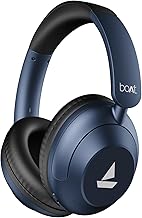


Finding a genuinely good-value pair of Bluetooth headphones is not simply a matter of choosing the lowest price or the model with the largest specification list. The better approach is to compare the features that have the greatest effect on everyday listening: sound quality, comfort, wireless stability, battery performance, microphone quality, controls, build quality and the availability of useful features.
For Indian buyers, value also depends on how well a headphone fits local usage patterns. A model used for office calls may need different strengths from one intended for music, travel, online classes, gaming or daily commuting. Climate, long listening sessions, smartphone compatibility and the availability of service support can also influence the practical value of a purchase.
Brands such as Sony, JBL, Sennheiser, Soundcore, boAt, OnePlus, realme and Nothing offer products across different price and feature segments. However, brand recognition alone should not determine the final choice. Always compare the specifications and features of the individual model you are considering.
A good-value Bluetooth headphone delivers a useful combination of performance and ownership convenience without charging a large premium for features that you may never use. Value is therefore different from simply being inexpensive.
Before choosing a headphone, decide whether an over-ear or on-ear Bluetooth design is actually preferable to true wireless earbuds. Headphones generally provide larger earcups, a physical headband and potentially better passive isolation, while earbuds are smaller and easier to carry.
Over-ear Bluetooth headphones can be particularly attractive for people who spend several hours listening at a desk, travelling by train or plane, attending online meetings or watching films. The larger physical design can also allow more room for battery capacity, controls and microphones.
On-ear models can be lighter and more compact, but the pressure on the outer ear may become noticeable during long sessions. Earbud users, meanwhile, often prioritise portability and pocket-friendly storage.
Sound quality cannot be determined from a single specification. Terms such as driver size, frequency response and supported Bluetooth codecs can provide useful technical information, but they do not independently guarantee better sound.
Bluetooth headphones commonly use dynamic drivers, with different models using different driver diameters. A larger driver does not automatically mean better sound. Tuning, enclosure design, amplification, digital signal processing and the interaction between the headphone and the listener's ears all contribute to the final result.
Many consumer headphones are tuned with enhanced bass because it can make popular music, Bollywood tracks, electronic music and action films feel more energetic. Excessive bass, however, can reduce vocal clarity or make instruments sound less separated.
If you mainly listen to vocals, podcasts, acoustic music or classical recordings, a balanced tuning may be preferable to an aggressively bass-heavy presentation.
The midrange contains much of the information that makes speech and vocals intelligible. Clear mids are especially important for podcasts, audiobooks, video calls and dialogue-heavy films.
Treble contributes detail and perceived brightness. Too little can make music sound dull, while excessive treble can become fatiguing for some listeners. If possible, consider whether a headphone offers an equaliser through its companion application so that its sound can be adjusted to your preference.
Active noise cancellation, commonly called ANC, uses microphones and electronic processing to reduce certain types of external sound. It can be valuable in offices, public transport, aircraft cabins and other environments with continuous background noise.
ANC should not be treated as a guarantee that all outside sound will disappear. It generally works more effectively against steady low-frequency sounds than sudden voices, traffic changes or irregular noises. Passive isolation from the earcups also contributes to the overall result.
Passive isolation comes from the physical fit of the earcups and materials surrounding the ears. A well-fitting closed-back over-ear headphone can reduce external sound even when ANC is switched off.
ANC can complement passive isolation, but buyers who mainly listen at home may not need to spend extra on advanced noise cancellation. For frequent commuters and travellers, however, ANC can be one of the more meaningful premium features.
Transparency modes use microphones to feed some external sound back into the headphones. This can make it easier to hear announcements, communicate briefly with another person or remain aware of your surroundings without removing the headphones.
For commuting and office use, a good transparency mode can be more useful than having ANC available all the time. Buyers should consider both functions rather than judging a headphone solely by whether ANC is listed in the specifications.
Bluetooth version is worth checking, but the newest Bluetooth number does not automatically mean the headphone will sound better. The complete wireless implementation, phone compatibility, supported profiles and software all influence the experience.
For everyday use, look for dependable pairing, stable playback and straightforward switching between commonly used devices. If you regularly use a smartphone and laptop together, multipoint connectivity can be particularly valuable.
Multipoint allows compatible headphones to maintain connections with more than one device. For example, you may be listening to a laptop while keeping the headphones connected to a smartphone for calls.
This feature is convenient for professionals and students who frequently move between a computer and phone. It is important to verify exactly how multipoint works on the specific model because implementation can differ between products.
Bluetooth codecs determine how audio is encoded and transmitted wirelessly. Depending on the headphone and source device, you may encounter codecs such as SBC, AAC, aptX or LDAC.
Codec support matters most when both the headphone and playback device support the same codec and the software environment can use it. A premium codec listed on a product page should therefore not be treated as a universal indicator of superior sound.
For most buyers, a well-tuned headphone with a stable connection and comfortable fit is more important than selecting a product solely because it supports a particular codec.
Battery life is one of the most practical specifications to compare. A headphone with strong battery endurance can be more convenient than a feature-rich model that requires frequent charging.
When comparing advertised battery figures, check the conditions under which the figure is quoted. Battery performance can vary according to volume level, ANC usage, codec selection, microphone activity and other features.
Fast charging can be particularly useful for commuters and office users. Even when total battery capacity is not exceptional, a short charging session that provides several hours of additional playback can reduce the inconvenience of an unexpectedly low battery.
USB-C charging is now a convenient feature because many phones, tablets, laptops and other accessories use the same connector. Before buying, check what charging cable is included and whether the headphone supports the charging behaviour you expect.
A headphone can have excellent specifications and still be a poor purchase if it becomes uncomfortable after 30 or 60 minutes. Comfort should be evaluated as a primary buying criterion rather than an afterthought.
Lower weight can reduce fatigue during long listening sessions, although weight alone does not determine comfort. Weight distribution, headband padding and clamping force can matter just as much.
Clamping force is the pressure used to keep the headphones securely positioned. Too little can make a headphone feel unstable, while too much may create pressure around the head or ears.
Check whether the earcups are large enough to surround your ears if you prefer an over-ear fit. Cushion material also influences heat retention, softness and long-term comfort.
A well-padded headband can reduce pressure at the top of the head. This becomes increasingly important when headphones are worn throughout a working day.
Value should be assessed over the expected period of use, not only on the day of purchase. A cheaper headphone is not necessarily better value if its hinges, buttons, cushions or charging connection become inconvenient to use prematurely.
People often evaluate headphones primarily for music and overlook microphone performance. If you frequently use Google Meet, Microsoft Teams, Zoom, phone calls or online classes, microphone quality deserves its own comparison.
Multiple microphones and noise-processing technology can help improve voice pickup, but the number of microphones alone does not guarantee excellent call quality. The surrounding environment, wind, keyboard noise and software processing can all affect how clearly your voice is transmitted.
If calls are a major reason for buying the headphones, look for independent call-quality demonstrations or verified customer feedback that specifically discusses microphone performance rather than relying only on the manufacturer's feature list.
Music-focused buyers should prioritise sound tuning, comfort and connection stability. Consider whether you prefer strong bass, balanced sound, prominent vocals or the ability to customise an equaliser.
For office use, comfort, microphone quality, multipoint connectivity and reliable controls can be more important than maximum bass or advanced audio codecs. ANC can be valuable in shared workspaces.
Frequent travellers should consider ANC performance, battery endurance, folding design, portability, comfort and the ability to continue using the headphone when the battery is depleted if the particular model supports wired operation.
Students may benefit from a combination of comfort, battery life, microphone quality and straightforward controls. If the headphone will be carried between home, college and public transport, durability and compact storage are also worth considering.
For films and streaming content, dialogue clarity, comfort and stable wireless playback should be high on the priority list. ANC can improve immersion in noisy surroundings, while a balanced sound profile can make dialogue easier to follow.
Bluetooth headphones can be convenient for casual gaming, but buyers should check latency, platform compatibility, microphone behaviour and supported connection modes. Dedicated gaming headsets may be more appropriate when low-latency competitive gaming is the main purpose.
Some wireless headphones also provide a wired listening option through an appropriate audio connection. This can be useful when the battery is depleted, when using an in-flight entertainment system or when connecting to equipment without Bluetooth.
Do not assume every headphone supports audio playback through every available port. USB-C may be intended primarily for charging on one model and may support digital audio on another. Check the exact specifications before relying on wired functionality.
A foldable headphone can occupy less space in a backpack or travel bag, but moving hinges introduce additional mechanical components. Frequent travellers should consider both compactness and the apparent robustness of the folding mechanism.
A protective case can also make a meaningful difference to long-term ownership because headphones are more exposed to pressure, dust and accidental impacts when carried loose in a bag.
Physical controls are often easier to operate without looking at the headphone, while touch controls can provide a clean and modern interface. The better option depends on personal preference and how often you operate the headphones while walking or commuting.
Companion applications can provide additional functions such as equaliser adjustments, firmware updates, noise-control settings, custom buttons and battery information. Software support can therefore add practical value beyond the hardware specifications.
Before purchasing, check whether the manufacturer's application is compatible with your smartphone's operating system and whether the features you want are actually available on the specific model.
Not every over-ear Bluetooth headphone is designed for exposure to water or sweat. If you intend to use headphones during exercise or outdoors, check the manufacturer's stated protection rating rather than assuming that the product is water resistant.
Even where some resistance is specified, that does not mean the headphone is suitable for heavy rain, immersion or prolonged exposure to moisture. Follow the manufacturer's usage limitations.
A specification sheet is most useful when it is interpreted as a complete package. Comparing one number at a time can lead to misleading conclusions.
The cheapest option may be adequate for basic listening, but price alone does not indicate comfort, durability or microphone performance. A slightly more expensive model may offer features that are significantly more useful for your particular routine.
Extra modes and specifications are useful only when they solve a real problem. If you never travel, advanced ANC may have less value to you than improved comfort or a better microphone.
Comfort is difficult to judge from a product specification table. Pay attention to dimensions, weight, cushion design and verified customer feedback where available.
Battery life is important, but it should not outweigh poor sound, uncomfortable earcups or unreliable Bluetooth. Consider the complete ownership experience.
Codec compatibility depends on both the source device and the headphones. Confirm compatibility before paying a premium for a codec that your primary device may not use.
For an electronic product expected to be used for years, warranty coverage and service availability can influence the real value of the purchase. Verify current terms for the exact model and seller before ordering.
Customer reviews can be helpful, but the most useful approach is to look for repeated observations rather than relying on a single highly positive or negative comment.
There is no universal price at which a Bluetooth headphone becomes a good value. The sensible choice depends on the features you require and the amount you expect to use the product.
Prioritise dependable Bluetooth, acceptable sound, reasonable comfort, usable battery life and basic call functionality. Avoid paying extra for advanced features you are unlikely to use.
This segment can be attractive for shoppers looking for a stronger combination of sound, comfort, battery life, microphones and additional software features. Compare several models rather than assuming the most popular product is automatically the best fit.
If you frequently travel, work in noisy environments or care strongly about customisable sound, premium ANC, multipoint connectivity and refined construction may justify spending more. The value comes from using those features regularly.
Different brands can have different strengths across their product ranges, but no brand should be treated as universally superior. Sony and Sennheiser are established names in personal audio, JBL has a broad consumer-audio portfolio, while Soundcore competes across feature-focused Bluetooth products. Indian consumers also commonly encounter value-oriented ranges from boAt, OnePlus and realme.
When comparing brands, look at the exact model's specifications, software support, warranty terms, service arrangements and verified customer feedback. Brand reputation is useful as a starting point, not as a substitute for model-level research.
Before placing an order, confirm that the headphone works with your primary devices and supports the functions you expect. Most modern Bluetooth headphones are designed for broad compatibility, but advanced features can vary according to operating system, device manufacturer and application support.
Regular care can help preserve comfort, hygiene and functionality. Headphones collect skin oils, dust and moisture through normal use, particularly around ear cushions and headbands.
Rechargeable batteries naturally age with use. Avoid unnecessary heat and follow the manufacturer's charging guidance. There is generally little benefit in repeatedly stressing a battery simply to maintain a particular charge percentage unless the manufacturer specifically recommends a battery-care procedure.
If a headphone will not be used for an extended period, consult the manufacturer's storage recommendations rather than leaving it continuously connected to a charger without checking the instructions.
A long list of products becomes much easier to evaluate when you assign priorities before comparing models. Start by identifying the primary use case, then eliminate products that fail essential requirements.
The best value choice is the product that delivers the features you actually need without unnecessary spending. A traveller may place ANC and battery life above everything else, while a home listener may prefer better sound tuning and comfort. Someone attending meetings throughout the day may reasonably prioritise microphone performance and multipoint connectivity.
This is why a useful comparison should identify different strengths rather than declaring one headphone universally superior. The right choice depends on your listening habits, devices, environment and priorities.
There is no single model that is best for every buyer. The right choice depends on your budget, preferred sound, comfort requirements, ANC needs, call usage, battery expectations and the devices you intend to connect.
No. More expensive headphones can offer stronger noise cancellation, more advanced processing, premium construction or additional connectivity features, but those improvements may not matter to every listener. Value depends on whether the additional features are useful to you.
No. ANC is most useful in environments with persistent background noise, such as public transport, offices and aircraft cabins. For quiet home listening, comfort and sound quality may be more important.
Choose enough capacity for your normal routine rather than chasing the largest advertised number. Frequent travellers and heavy users generally benefit from longer endurance, while occasional listeners may have little reason to prioritise maximum battery life.
Neither design is universally better. Over-ear headphones can provide a comfortable full-ear fit and are often well suited to long listening sessions, while earbuds offer greater portability. Your preferred form factor should depend on comfort, portability and intended use.
No. Bluetooth version is only one part of wireless performance. Connection stability, supported profiles, codec compatibility, device support and software implementation all matter.
Not necessarily. Driver size can influence design and performance, but tuning, enclosure design, signal processing and other factors also affect perceived sound quality.
A companion app can be useful when it provides features you will actually use, such as equaliser controls, firmware updates, noise-control settings or custom controls. It is not essential if you prefer a simple plug-and-play experience.
Verify the exact model, current specifications, compatibility, warranty terms, included accessories and current retailer price. Also review recent customer feedback for recurring issues involving comfort, battery performance, connectivity and microphone quality.
They can be, provided the model is comfortable for your head and ears. Weight, earcup size, cushion material and clamping force should be considered alongside microphone quality and battery life.
Bluetooth headphone models, specifications, prices and availability can change during the year. For a purchase in 2026, compare the latest product information and current retailer listings immediately before ordering rather than relying solely on an older price or specification.
A meaningful value comparison should balance product capability with practical ownership considerations. Rather than treating one specification as decisive, compare sound, comfort, connectivity, battery performance, call quality, noise control, build quality and useful software features together.
Product specifications and prices can change, so buyers should verify the latest information before purchase. Current retailer pricing should also be checked separately because promotional pricing and availability may change independently of the underlying product specifications.
For an independent purchase decision, use the shortlist as a starting point, compare the individual models against your requirements, read verified customer feedback, and check the latest specifications and warranty information before ordering.