

♥ Wishlist
Compare 45 verified Bookcases for Stylish & Organised Book Storage products in India. Reviews, ratings, pros, cons and buying advice updated for October 2026.


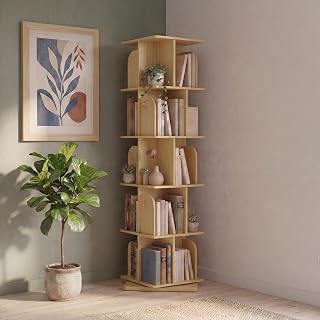


Choosing a bookcase in India is not simply a matter of finding the lowest price. A genuinely good-value bookcase should balance usable storage, structural stability, material quality, dimensions, finish, ease of assembly and long-term practicality. The right choice depends on where the bookcase will be used, how much weight it needs to carry, how frequently the shelves will be accessed and how much floor space is available.
For 2026 shoppers, value can mean different things. A compact bookshelf may be the better purchase for a bedroom or rented apartment, while a wider multi-shelf unit can offer better value for a home library, study or living room. A tall narrow bookcase can maximise vertical space, whereas a low storage unit may be more suitable when children need easy access to books.
This guide is designed to help Indian shoppers compare bookcases on meaningful criteria rather than relying only on headline ratings, promotional claims or attractive product photographs. When comparing options from brands and retailers such as IKEA, Wakefit, Nilkamal, Amazon Basics, Home Centre, Pepperfry and Urban Ladder, always check the individual product specifications because construction, dimensions and included components can vary substantially between models.
A value pick should provide a sensible combination of price, functionality and expected durability. The cheapest bookcase is not necessarily the best value if its shelves are unsuitable for the intended load, its dimensions waste available space or its construction makes it difficult to keep stable.
For an informed comparison, consider the complete ownership proposition rather than just the listed price. A bookcase that costs slightly more but provides stronger shelves, better dimensions, adjustable storage and more suitable construction may represent better value for a particular room.
The material used in a bookcase has a major influence on appearance, weight, rigidity, moisture resistance and expected service life. Two products with similar dimensions can behave very differently because their panels, edges, backs, joints and support systems are constructed differently.
Medium-density fibreboard, commonly called MDF, is manufactured from wood fibres compressed with binders. It provides a relatively smooth surface and is frequently used for painted, laminated or veneered furniture.
MDF can be an attractive option when you want a clean contemporary appearance and consistent panel surfaces. However, buyers should pay attention to panel thickness, edge treatment and protection from moisture. MDF should not be treated as automatically equivalent to solid timber simply because it has a wood-based appearance.
Particle board is made from compressed wood particles and is widely used in affordable furniture. It can provide good value when properly engineered and finished, particularly for indoor dry environments.
The important considerations include panel thickness, fastener quality, edge protection and the design of the joints. Avoid judging a particle-board bookcase purely from its material name. Construction details can make a significant difference to practical performance.
Solid wood can provide a traditional appearance and substantial construction, although the term covers many different wood species and construction methods. Wood can also respond to changes in humidity and temperature, so buyers should still evaluate the quality of joinery, surface treatment and overall design.
Solid-wood furniture may also be heavier than engineered-board alternatives. That can be an advantage for perceived solidity but a disadvantage if the bookcase needs to be moved frequently.
Metal shelving can be useful for contemporary interiors, offices, utility rooms and locations where an industrial appearance is desirable. Steel frames can offer strong structural support when properly designed, but the quality of the frame, shelf construction, joints and finish still matters.
Metal shelving is not automatically better than wood-based furniture. Evaluate the entire structure, including how the shelves connect to the frame and whether the unit is designed to resist side-to-side movement.
Dimensions are among the most important specifications to verify before buying. Product photographs can make furniture appear smaller or larger than it actually is, particularly when the room shown in the image is spacious.
Tall bookcases maximise vertical storage but may require greater attention to stability and installation. They can be especially useful in smaller rooms where floor area is limited.
Shorter units are easier to access and can work beneath windows, along low walls or as multipurpose furniture. They can also be more convenient for frequently accessed books.
Wide bookcases can provide substantial storage but may require stronger shelf support to prevent excessive deflection. If you plan to store heavy hardback books, encyclopaedias or large-format publications, examine the shelf construction rather than judging capacity solely by the number of compartments.
A deeper shelf is not automatically better. Excess depth can cause books to sit too far back or create unused space. A shallower bookcase can be more efficient for standard paperbacks and novels, while deeper shelves may be useful for larger books, decorative objects and mixed storage.
Fixed shelf spacing can make a bookcase look neat but may limit how efficiently you use it. Adjustable shelves provide greater flexibility because you can create taller compartments for large books and shorter compartments for paperbacks.
Before buying, estimate the height of the tallest books you actually own. A bookcase with many shelves is not necessarily more useful if the spacing prevents you from storing larger volumes without wasting vertical space.
Load capacity deserves particular attention when the bookcase will store heavy books. A shelf filled with paperback novels can have a very different load from a shelf filled with large textbooks, art books or hardbound reference material.
Always use the manufacturer's stated load information when it is available, and distinguish between the capacity of an individual shelf and the maximum capacity of the entire unit. Do not assume that evenly distributing books automatically makes an overloaded shelf safe.
Long shelves are particularly important to inspect because greater unsupported spans can increase the likelihood of visible bending under load. Centre supports, thicker panels and appropriate shelf construction can help address this issue.
Stability should be treated as a core buying criterion rather than an optional feature. Tall furniture can present a tipping hazard if it is unstable, overloaded, placed on an uneven surface or used inappropriately.
When evaluating a tall bookcase, check whether the manufacturer provides a wall-anchoring method or anti-tip hardware. Follow the supplied installation instructions and use an appropriate fixing method for the wall construction in your home.
Open shelving provides immediate visibility and easy access. It works particularly well for books, decorative pieces, plants and frequently used items. The trade-off is that exposed shelves collect dust and leave stored items visible.
Closed bookcases or shelving systems with doors can provide a cleaner visual appearance and help protect contents from everyday dust. However, doors add hardware, weight and clearance requirements.
Indian homes vary considerably in size, layout, climate and construction. A suitable bookcase for a large independent home may not be practical in a compact apartment, rented accommodation or student room.
For smaller bedrooms and apartments, vertical shelving can make better use of limited floor area. In larger living rooms, a wider unit may provide more practical storage without requiring excessive height.
Humidity and moisture should also be considered according to the room. A bookcase placed close to a damp wall, balcony opening, kitchen or area exposed to water may require more careful material selection than one used in a dry interior room.
For a small bedroom, prioritise footprint efficiency. A narrow vertical unit can provide several levels of storage while preserving valuable floor space. Avoid choosing a bookcase based solely on the number of shelves if the unit is too deep for the room.
Living-room bookcases often serve two purposes: storage and visual display. In this setting, finish, proportions and shelf spacing can be as important as capacity. Look for a design that accommodates books while leaving enough space for decorative items if that is part of your intended use.
A home-office bookcase may need to accommodate reference books, files, stationery, equipment and documents. Adjustable shelving can be particularly useful because office storage needs often change over time.
For children's rooms, accessibility and stability should take priority over maximum height. Low shelves can make books easier for children to reach, while taller furniture requires appropriate anchoring and careful supervision.
Freestanding bookcases are generally more flexible because they can be repositioned when the room layout changes. Their main considerations are footprint, stability and anchoring requirements.
Wall-mounted shelving can reduce floor usage and create a minimalist appearance, but installation quality becomes especially important. The wall type, fixing method and expected load should all be considered before installation.
For renters, installation restrictions may also influence the decision. Always check the property rules and understand whether permanent wall fixings are permitted.
The back of a bookcase can influence rigidity, appearance and protection of stored items. A full back panel can help create a more enclosed appearance and may contribute to the overall structure depending on the furniture design.
Open-back designs can look lighter and may work well in contemporary spaces, but they expose the wall behind the unit. They may also allow smaller items to fall behind the shelves.
When comparing two similar-looking bookcases, inspect whether a back panel is included, how it is attached and whether it forms part of the structural design.
Many affordable bookcases arrive flat-packed or require some assembly. The assembly process can affect the final stability of the unit, so buyers should not treat it as an insignificant detail.
A low purchase price can be attractive, but price alone does not reveal shelf construction, dimensions, stability or suitability for heavy books. Compare the complete specification before deciding.
One of the most avoidable mistakes is ordering furniture without measuring the installation area. Record the available width, height and depth rather than estimating visually.
If your collection contains heavy books, examine shelf capacity and construction carefully. A decorative shelf designed for light objects may not be appropriate for a dense library.
The number of shelves does not tell the whole story. Shelf dimensions and spacing determine how efficiently the available volume can actually be used.
A bookcase may fit the final room but still be difficult to bring into the home. Check package dimensions where available and consider doorways, staircases, lifts and narrow corridors.
Tall furniture should be assessed for its stability and anchoring requirements. Do not assume a tall unit is safe simply because it feels heavy when empty.
When several products look similar, create a simple comparison based on measurable characteristics. This reduces the influence of photography and promotional language.
Customer reviews can be useful, but the most valuable information is often found in recurring comments rather than isolated five-star or one-star opinions. Look for repeated observations about assembly, stability, dimensions, finish, shelf strength and long-term usability.
Pay attention to reviews that explain how the furniture is being used. A review from someone storing lightweight decorative objects may not tell you much about how the same bookcase performs under a heavy collection of textbooks.
Minimalist shelving typically uses simple lines, limited decorative detailing and a restrained finish. It can work particularly well in modern apartments, bedrooms and home offices.
Industrial designs often combine metal frames with wood-effect or engineered-wood shelves. They can suit contemporary interiors and provide a visually strong alternative to conventional enclosed furniture.
Traditional designs can provide a warmer appearance and may suit classic interiors. Evaluate the actual construction rather than assuming a traditional appearance indicates superior durability.
Ladder-style shelves taper toward the top and can provide a lighter visual footprint. Their shape makes them useful where appearance is important, although the available storage volume may be lower than that of a rectangular unit of similar height.
Cube-style shelving can accommodate books alongside baskets, storage boxes and decorative objects. Modular designs can be useful when storage needs are likely to change.
Colour should be considered alongside the room's lighting, wall colour and existing furniture. White and light finishes can visually reduce the heaviness of a large shelving unit, while darker finishes can create stronger contrast.
Wood-effect finishes can provide warmth without the construction being made from solid timber. Always verify the actual material rather than inferring it from the product's appearance.
For high-use rooms, also consider how easily fingerprints, dust and minor marks may be visible on the chosen finish.
A well-designed bookcase becomes more useful when its storage is organised around the size and frequency of use of the books. Keep frequently accessed books at convenient heights and consider grouping larger volumes in areas with adequate vertical clearance.
Regular basic maintenance can help keep a bookcase looking presentable and operating as intended. Dust shelves and surfaces using a method suitable for the material and finish. Avoid excessive moisture, particularly on engineered wood products that are not designed for wet conditions.
Periodically inspect the unit for signs of loosening, movement, damaged components or shelf deformation. If the manufacturer provides specific maintenance instructions, those should take priority over generic furniture-care advice.
If your priority is keeping the initial purchase cost low, concentrate on essential storage rather than decorative features. A simple engineered-wood bookcase with practical dimensions can be more useful than an elaborate unit that provides less usable capacity.
At a higher budget, compare construction quality, adjustability, finish, shelf support and overall design. This is also the range where it can make sense to pay more for features that solve a specific problem, such as adjustable shelving or improved storage configuration.
For a premium purchase, focus on construction, material quality, joinery, finish consistency, stability and long-term suitability. Premium pricing should be evaluated against actual specifications rather than appearance alone.
The terms bookcase and bookshelf are often used interchangeably, but buyers can benefit from thinking about the furniture according to its intended function. A simple bookshelf may be ideal when only one or two levels of storage are required, while a full-height bookcase makes more sense when the goal is to maximise vertical storage.
If your needs include books, files, display pieces and miscellaneous household items, a more versatile shelving configuration may provide better value than a unit designed exclusively around books.
A bookcase is not always the most efficient storage solution. If you need concealed storage, a cabinet may be more appropriate. If floor space is extremely limited, wall-mounted shelves could be worth considering. If the primary requirement is a large quantity of heavy books, a purpose-designed shelving system may be preferable to a lightweight decorative bookcase.
The best purchase is therefore the one that solves the actual storage problem rather than simply matching a popular furniture category.
If you are unsure which type to choose, start with the room rather than the brand. Measure the space, estimate the number and size of books, decide whether open or closed storage is preferable, and establish a realistic budget.
No. A higher price can reflect materials, finish, design, construction or brand positioning, but it does not automatically guarantee that a product is the right choice for your needs.
Value should be assessed relative to the intended use. Paying more for premium finishing may make sense in a prominent living room, while a straightforward shelf can be the smarter choice for a utility area. Conversely, choosing the cheapest available product can be a false economy if it lacks the stability or capacity required for a heavy book collection.
Brand recognition can make it easier to find product documentation, specifications and replacement information, but brand name alone should not determine the purchase. Compare actual dimensions, materials, load information, construction and customer feedback.
Brands such as IKEA, Wakefit, Nilkamal, Amazon Basics, Home Centre, Pepperfry and Urban Ladder may appear across furniture comparisons, but individual models should always be assessed on their own specifications rather than assuming every product from a particular brand has the same construction quality.
The strongest way to improve value is to match the furniture to the actual storage requirement. Buying a much larger unit than necessary consumes space and budget, while buying an undersized unit can lead to another purchase soon afterward.
Consider future storage needs as well. If your book collection is growing, a slightly larger but appropriately sized bookcase may be more practical than buying a unit that is already close to capacity.
There is no single best-value bookcase for every Indian household. The right choice depends on your budget, available space, required shelf capacity, preferred material, design preferences and the weight of the items you plan to store. Compare the current specifications and customer feedback for the individual models you are considering.
There is no universal best material. MDF and particle board can provide practical value for many indoor applications, solid wood can offer a different appearance and construction approach, and metal can work well for certain contemporary or utility applications. The quality of construction matters as much as the material category.
MDF furniture can be durable when appropriately designed, manufactured and used within its intended conditions. Check panel construction, joints, edge treatment, shelf support and load information instead of judging durability from the material name alone.
Particle board can be suitable for indoor bookshelves when the product is properly constructed and used within its stated limits. Buyers should pay particular attention to shelf support, panel thickness, fasteners, edge protection and moisture exposure.
The ideal depth depends on the books and other objects you intend to store. Standard books generally do not require extremely deep shelves, while oversized books and mixed storage may benefit from additional depth. Measure your largest frequently stored items before purchasing.
Adjustable shelves can be worthwhile when your collection includes books of different sizes or is likely to change. They provide flexibility that fixed shelf spacing cannot offer, although the value depends on the price difference and how much you will actually use the adjustment.
Placing heavier items lower can help keep the centre of gravity lower and can be practical for organising a stable unit. However, always follow the product's load limits and installation instructions rather than relying on arrangement alone.
Many tall furniture units are designed with an anti-tip or wall-anchoring method. Follow the manufacturer's safety instructions for the specific product and use suitable hardware for the wall construction.
A narrow vertical bookcase can often make better use of limited floor area than a wide, deep unit. Measure the room carefully and make sure the chosen height, depth and installation requirements are practical for the space.
Open shelving is convenient for displaying and accessing books, while closed storage can create a cleaner appearance and help shield contents from everyday dust. Your choice should depend on accessibility, cleaning preferences and the room's design.
Compare their dimensions, shelf spacing, materials, shelf adjustability, load information, construction, back panel, stability provisions, assembly requirements and customer feedback. The product with the lower price is not automatically the better value.
No. Ratings can provide useful signals, but they should be considered alongside detailed reviews and technical specifications. Look for recurring feedback about stability, assembly, finish, dimensions and real-world storage use.
Not by itself. Shelf dimensions, usable spacing, depth, load capacity and total storage volume are more meaningful indicators of whether the furniture will suit your collection.
Check the current product dimensions, materials, shelf configuration, load information, assembly requirements, package details where available, customer feedback and retailer information. Also confirm the current price and product availability immediately before purchase because online listings can change.
The best value bookcase is the one that delivers the storage capacity and construction you actually need without consuming unnecessary space or budget. Start with measurements, determine the weight and size of your books, choose an appropriate material and configuration, and then compare individual products on their specifications.
Do not let attractive photography, a large number of shelves or a high review score replace proper evaluation. Look for clear product information, realistic dimensions, suitable load capacity, appropriate stability provisions and detailed customer feedback.
Before making a purchase, compare the shortlisted models side by side, read verified customer reviews, check the manufacturer's specifications and confirm today's price and availability from the retailer. Taking a few extra minutes to evaluate these details can help you choose a bookcase that fits your room, your books and your budget much more effectively.