


♥ Wishlist
Compare 61 verified Baby Bedding Set for Comfortable Sleep and Nursery Care products in India. Reviews, ratings, pros, cons and buying advice updated for October 2026.


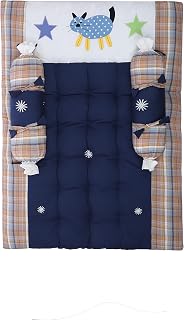


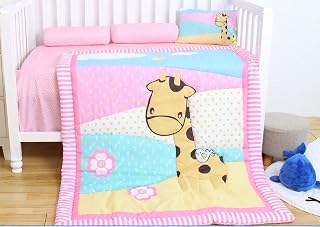

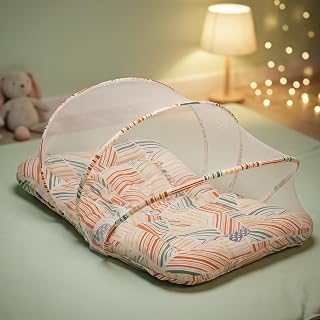


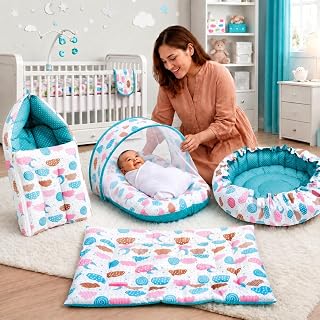


Choosing a baby bedding set is less about buying the largest bundle and more about selecting the pieces that are genuinely useful, comfortable, washable and appropriate for a baby's sleeping environment. A set may include a bedsheet, pillow, bolster, blanket, mosquito net, mattress protector, swaddle or other accessories, but the presence of more items does not automatically make it better value.
For families in India, the choice also needs to account for climate, frequent washing, humidity, dust, fabric breathability and the baby's sleeping arrangement. A bedding set that works well in a cool room may be unnecessarily warm in a hot and humid environment, while a very lightweight set may not be suitable for colder conditions.
Baby bedding sets vary considerably in their contents. Before comparing prices or ratings, check exactly what is included and whether each component is suitable for the intended use.
The most important buying decision is not whether a set contains six, eight or ten pieces. For infants, the sleeping environment should be considered separately from decorative or convenience-oriented accessories.
Look for a firm, flat and appropriately sized sleep surface and avoid treating soft cushions, loose pillows, thick quilts, stuffed accessories or positioning products as essential infant bedding. A product description can contain the words “baby safe” or “newborn friendly”, but those marketing phrases should not replace careful evaluation of how the item will actually be used.
If a bedding set contains accessories that are intended to remain around the baby while sleeping, check their purpose and age recommendations carefully. In particular, parents should distinguish between products intended for supervised daytime use and products suitable for an infant's unattended sleep environment.
Fabric choice has a major effect on everyday usability. India's climate varies from cool northern winters to very hot summers and humid coastal conditions, so there is no single fabric weight that is ideal everywhere.
Cotton is a practical choice for many households because it is generally comfortable, familiar and relatively easy to wash. For warm weather, lightweight cotton can be preferable to heavily padded bedding. When comparing cotton sets, look beyond the word “cotton” and check the actual product specification, weave, thickness, dimensions and washing instructions.
Muslin fabrics are often chosen for their lightweight construction and airflow. Muslin can be useful for wraps and lightweight bedding layers, particularly in warmer conditions. However, softness and durability can differ substantially between products, so the specification and care instructions matter.
Polyester and cotton-polyester blends can offer advantages such as quick drying, wrinkle resistance and potentially lower maintenance. They may be practical for some accessories or situations where frequent washing is required. However, parents should consider breathability, texture and the room's temperature rather than selecting a material solely because it is easy to maintain.
Quilted bedding can be useful as a general nursery or supervised-use accessory, but extra padding is not automatically an advantage for infant sleep. A thicker product can also be more difficult to wash and dry thoroughly. Consider where and when the item will be used before paying more for additional padding.
Product photographs can make bedding look premium, but several less obvious details are more useful when comparing alternatives.
One of the easiest mistakes is buying a bedding set first and checking the mattress size later. Baby mattresses and cots are not necessarily standardised across every manufacturer or household setup.
Measure the mattress length, width and thickness before ordering a fitted sheet. If the set includes a mattress, compare its stated dimensions with the actual sleeping space. A loose-fitting sheet can bunch up, while an incorrectly sized fitted sheet may not remain securely positioned.
For products intended for a cot, crib, bassinet or portable baby bed, use the manufacturer's specified dimensions rather than relying on approximate measurements such as “standard baby size”.
Thread count is often highlighted in bedding marketing, but it should not be treated as a standalone measure of quality. The fibre, yarn, weave, finishing process, fabric weight, stitching and durability all influence how a bedsheet feels and performs.
For baby bedding, practical characteristics such as softness, breathability, washability, secure fit and freedom from unnecessary decorative components can be more meaningful than choosing the highest advertised thread-count figure.
Baby bedding is exposed to milk spills, food, drool, sweat, urine, dust and other everyday messes. As a result, the easiest set to live with is often one that can be washed regularly without complicated care requirements.
For Indian households, drying time deserves particular attention. In humid weather or during monsoon periods, bedding that takes a long time to dry can be inconvenient. Having washable spare sheets may therefore provide more practical value than buying a larger set containing seldom-used accessories.
There is no universal number, but buying multiple interchangeable sheets can be more useful than purchasing one oversized bedding bundle. Babies can require frequent bedding changes, so having a clean replacement available can make everyday routines easier.
A sensible approach is to prioritise frequently used items first. Additional blankets, decorative cushions, matching bolsters and other accessories can be considered only after the core bedding requirements have been covered.
Age is an important consideration because a bedding product suitable for an older child may not be appropriate for a newborn.
Prioritise a simple, firm and appropriately fitted sleep surface. Avoid assuming that pillows, bolsters, loose blankets or decorative cushions are necessary simply because they are supplied in a newborn bedding set.
As a child grows and sleeping arrangements change, the usefulness of particular accessories may change as well. Always follow the manufacturer's age guidance and current safe-sleep recommendations when introducing new bedding products.
Toddler bedding can offer greater flexibility because the child's sleeping setup and developmental needs differ from those of a newborn. Even then, select dimensions carefully and prioritise washable, durable fabrics.
For hot Indian summers, lightweight and breathable materials can be more practical than heavily layered bedding. Consider the temperature of the actual room rather than the season alone, since air conditioning, coolers and fans can substantially change the sleeping environment.
Light-coloured fabrics may also be preferred by some households because they make visible stains easier to identify. More importantly, choose bedding that can be washed frequently and dried efficiently.
Winter requirements differ significantly between regions. A family in a colder northern city may need warmer nursery layers than a household in a relatively mild southern or coastal climate.
Rather than automatically choosing the thickest bedding set, consider room temperature, clothing layers and the baby's sleeping environment. Heavy bedding should not be selected merely because it feels warmer to an adult.
Monsoon conditions create a different set of practical challenges. Increased humidity can slow drying, while damp bedding can become unpleasant to use.
The lowest price is not necessarily the best value, and the largest bundle is not necessarily the best deal. A more useful comparison considers the cost and usefulness of the individual components.
Count the components you genuinely expect to use. A five-piece set containing several regularly used sheets may offer better practical value than a ten-piece set containing cushions and decorative accessories that remain unused.
Compare fabric composition, dimensions, construction and care requirements across shortlisted products. If one listing gives detailed specifications while another relies primarily on marketing language, the better-documented option is generally easier to evaluate.
Consider how expensive it will be to replace the most frequently used items. A bedding set that includes several matching sheets can be particularly useful if individual replacement pieces are difficult to find or disproportionately expensive.
A product that survives frequent washing and remains comfortable can provide better value than a cheaper set that requires early replacement. Customer feedback mentioning shrinkage, colour fading, loose stitching or fabric deterioration can be useful when assessing this factor.
Star ratings provide a quick overview, but they do not tell the whole story. When comparing baby bedding sets, read reviews for specific evidence about the characteristics that matter to you.
Recent reviews can be particularly useful for identifying changes in packaging, specifications or manufacturing batches, but individual reviews should still be treated as anecdotal rather than definitive testing.
When researching baby bedding, shoppers may encounter established baby and home-textile brands such as R for Rabbit, Babyhug, Mothercare, Mee Mee, The Little Lookers, Masilo and Spaces. These brands can be useful starting points for comparison, but brand familiarity alone should not determine the purchase.
Compare the exact product specification, included pieces, dimensions, fabric composition, care instructions and current customer feedback for the individual model or set. Product quality can vary across different ranges, materials and price points within the same brand.
Cute prints, pastel colours, cartoon characters and coordinated designs can make a bedding set attractive, but appearance says little about fabric durability, fit or suitability for an infant's sleep environment.
A large accessory count can be persuasive, but unused components add little practical value. Identify the pieces that will actually enter your daily routine.
Even an otherwise excellent sheet becomes inconvenient if it does not fit the mattress correctly. Always compare measurements before buying.
Thick quilts and padded layers may be unnecessary in a warm room. Consider the actual sleeping environment and seasonal conditions.
Many traditional bedding sets include these accessories, but their inclusion should not be interpreted as a recommendation to place them around an infant during unattended sleep.
A bedding set that looks attractive but requires complicated maintenance can become inconvenient when frequent washing is necessary. Check care instructions before purchasing.
A percentage discount does not establish product quality or value. Compare the actual current selling price, specifications and included components rather than relying solely on promotional messaging.
If your budget is limited, start with the items that are washed and replaced most frequently. A practical collection can be built progressively rather than buying every accessory at once.
Prioritise simplicity. Choose well-specified core bedding rather than an oversized bundle filled with accessories whose purpose is unclear. Correct fit, easy washing and appropriate materials are more important than decorative completeness.
Compare the price per genuinely useful component. A moderately priced set with durable sheets may provide more value than an inexpensive bundle containing many rarely used pieces.
Focus on breathable, lightweight fabrics and quick-drying practicality. Consider purchasing additional spare sheets rather than relying on one large multi-piece set.
Consider the nursery's actual temperature and seasonal requirements. Layering can provide more flexibility than selecting one excessively heavy bedding set.
Prioritise construction quality, colour retention, easy-care instructions and fabric durability. The ability to repeatedly wash the most important components can have a greater impact on long-term value than the initial accessory count.
The best set depends on the baby's age, mattress dimensions, local climate, sleeping arrangement and washing routine. For many families, a simple set with correctly fitted, washable and breathable core bedding provides more practical value than a large decorative bundle.
Cotton is a popular choice because it can be comfortable and practical for regular washing. However, the quality of a cotton product depends on its construction, fabric weight, finishing and care requirements, so the material name alone should not determine the purchase.
Not every component of a baby bedding set is necessarily appropriate for a newborn's unattended sleep environment. Check age guidance carefully and avoid assuming that included pillows, bolsters, cushions or loose bedding should be placed around an infant while sleeping.
A pillow should not be considered an automatic requirement simply because it is included in a bundle. For infants, parents should follow current safe-sleep guidance and the recommendations appropriate to the child's age and sleeping arrangement.
Higher price does not automatically mean better value. Pay for characteristics that affect everyday use, such as appropriate fabric, durable construction, accurate sizing, easy maintenance and useful components.
The appropriate frequency depends on the item, how it is used and whether it becomes soiled. Sheets and other directly used bedding may need frequent washing, particularly after spills or accidents. Follow the fabric's care instructions and wash soiled items promptly.
Check the complete contents, fabric composition, measurements, washing instructions, age guidance, customer feedback and current seller information. Product images should be treated as supplementary information rather than proof of material quality or fit.
Not necessarily. Bundles can be convenient when most included pieces are useful, but individual purchases can offer better value when a family needs only specific items. Compare the cost and usefulness of each component.
In a warm room, lightweight and breathable bedding is generally more practical than heavily padded layers. The exact choice should account for the local climate, indoor temperature and the baby's clothing and sleeping environment.
Prioritise washable fabrics, practical drying times and spare sheets. Bedding should be dried thoroughly before use, particularly when high humidity makes drying slower.
The strongest value proposition in baby bedding is not the biggest package or the most elaborate design. It is a combination of appropriate materials, accurate sizing, durable construction, easy maintenance and genuinely useful components.
When comparing the best value picks in India for 2026, evaluate each set according to the baby's age, mattress dimensions, household climate and everyday washing requirements. Check the current specifications and customer feedback before purchasing because product configurations, prices and availability can change.
Most importantly, separate decorative convenience from infant sleep safety. A bedding set can contain attractive accessories that are useful for supervised activities or nursery organisation without those accessories being appropriate for an infant's unattended sleep space.
For a value-focused purchase, start with the essentials, compare equivalent specifications across several options, verify the exact contents of each bundle and choose the set that fits your actual routine rather than paying for accessories you are unlikely to use.