

♥ Wishlist
Compare 61 verified Baby Medical Kit for Newborn and Infant Care products in India. Reviews, ratings, pros, cons and buying advice updated for October 2026.


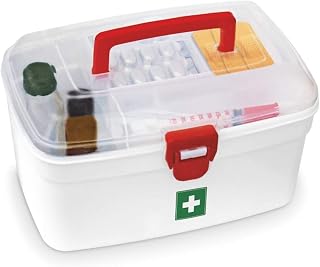


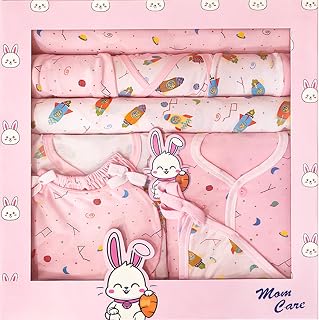
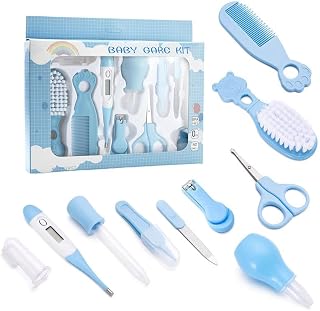


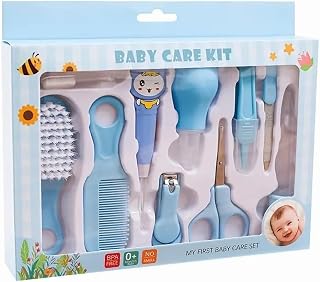


A baby medical kit is best viewed as a compact collection of practical health and grooming essentials rather than a substitute for professional medical care. For Indian families, the most useful kit is one that keeps everyday items organised, clearly labelled and easy to access when a baby develops a minor, unexpected need at home or while travelling.
When comparing baby medical kits, look beyond the number of pieces advertised on the packaging. A kit containing many low-value accessories may be less useful than a smaller set containing a dependable digital thermometer, age-appropriate grooming tools and a well-designed storage case. Check exactly what is included, whether individual components are suitable for babies, how easily they can be cleaned and whether replacement items can be purchased separately.
The ideal contents depend on the child's age and your family's requirements. A newborn-focused kit may prioritise grooming and temperature-monitoring essentials, while a kit for an older infant may benefit from additional travel and feeding-related accessories. Do not assume that every item marketed as a baby medical accessory is necessary.
These categories overlap, but they are not identical. A baby grooming kit generally focuses on routine care such as nail trimming, hair brushing and sometimes oral or nasal hygiene. A baby medical kit may include health-monitoring or first-aid-oriented accessories in addition to grooming tools.
For many households, combining both functions can be convenient, but convenience should not come at the expense of safety. If a kit includes products intended for medical use, assess those components individually rather than judging the entire kit by its accessory count.
A combined kit can be particularly convenient for parents who want a single storage location for frequently used baby-care accessories. It may also be practical for travel, provided the case is compact enough to carry without forcing important items into an overcrowded compartment.
Separate storage can make more sense when you need frequent access to grooming items but only occasional access to medical supplies. It can also help prevent confusion between routine-care accessories and items that should only be used for a specific purpose.
Inspect the materials used for handles, storage cases, brushes and other components. Baby-care products should be easy to clean and should not have obvious rough edges, loose parts or poorly finished surfaces.
For items that come into contact with the baby's skin, mouth or nasal area, pay particular attention to the manufacturer's material information and cleaning instructions. Avoid assuming that a material is appropriate simply because the product is labelled for babies.
Parents often use baby-care tools while holding a restless infant, so handling matters. Look for handles that are easy to grip and controls that can be operated without excessive force.
Small design details can make a substantial practical difference. A thermometer with a readable display, nail clippers with a controlled grip and a case with dedicated compartments may be more useful than additional accessories that rarely leave the packaging.
Baby medical and grooming accessories require appropriate cleaning because many are used close to the skin, nose, mouth or other sensitive areas. Before buying, determine which components can be washed, which require wiping, which should remain dry and whether any part needs replacement after use.
Never assume that an electronic component is waterproof merely because it is sold as a baby-care product. Follow the manufacturer's cleaning and storage instructions for each individual item.
A product suitable for a toddler is not automatically suitable for a newborn. Check the stated age range and intended use of every component, particularly accessories involving nasal care, oral care, medication measurement or small detachable parts.
A good case should make it obvious where each item belongs. Compartments can prevent small accessories from becoming mixed together, while a secure closure helps keep the contents contained during travel.
Consider the environment in which the kit will be stored. A bathroom may be convenient but can expose products to humidity. A dry, clean and accessible location away from children's reach is generally more practical for household storage.
If a baby medical kit contains a thermometer, evaluate the thermometer separately from the rest of the package. Consider display readability, measurement method, cleaning instructions, battery requirements and the manufacturer's guidance for the child's age.
Brands such as Dr Trust, Braun and Omron are examples of names consumers may encounter when comparing temperature-monitoring products in India, but the brand name alone should not determine the purchase. Check the specifications of the particular model and ensure that the instructions match the intended use.
Parents should also understand that a thermometer provides a temperature reading; it does not diagnose the underlying cause of a fever or illness. For infants and young children, follow appropriate medical guidance when symptoms are concerning, persistent or accompanied by other warning signs.
Baby nails can be surprisingly difficult to trim because infants move unpredictably. A useful nail-care accessory should allow controlled positioning and a clear view of the nail edge.
A nail file can also be useful for families that prefer gradual smoothing rather than clipping. The appropriate option depends on the baby's age, the parent's comfort level and the manufacturer's instructions.
Nasal-care products can vary considerably in design. Some use manual suction, while others rely on different mechanisms. When comparing them, focus on cleaning requirements, replaceable components, suction control, age suitability and the manufacturer's instructions.
A complicated design is not necessarily better. If a device has several small parts that are difficult to disassemble and clean correctly, a simpler design may be more practical for some households.
Use nasal-care products only as directed. If a baby is having difficulty breathing, feeding or otherwise appears seriously unwell, a medical assessment is more important than relying on a home-care accessory.
Some baby medical kits include medicine droppers, oral syringes or measuring cups. These accessories should be treated as measurement tools rather than as an indication that a particular medicine is appropriate for a child.
When medicine is prescribed or recommended, use the measuring device specified by the healthcare professional or medicine manufacturer. Avoid estimating doses with ordinary kitchen spoons because household spoons are not designed as precise medication-measuring instruments.
Keep medicines separate from ordinary grooming accessories where possible. A dedicated, clearly identified medicine-storage area can reduce the possibility of accidentally confusing a medicine with another household product.
The phrase “10-piece,” “15-piece” or “complete baby kit” can be useful for describing package contents, but piece count should not be the primary buying criterion. A higher number of components does not automatically mean better value.
Value is not simply the lowest purchase price. A useful comparison considers the usefulness, quality and longevity of the components that you are actually likely to use.
For example, suppose one kit includes a large number of grooming accessories while another includes fewer items but a better-organised case and more useful core components. The second kit may provide better practical value for a family that does not need every accessory in the larger set.
Before choosing between competing kits, make a simple checklist of the items you genuinely need. Then compare the included components, material information, cleaning requirements, age guidance and storage design.
A large accessory count can create the impression of better value. In practice, unused accessories add storage requirements without necessarily improving everyday care. Identify the core items first.
Customer ratings can be useful when researching products, but ratings should be interpreted alongside the specifications, included components and recent customer feedback. A rating does not tell you whether a particular kit contains the items you need.
Some components may require replacement over time for hygiene, wear or manufacturer-defined reasons. Check whether replacement parts are available before purchasing a kit containing specialised accessories.
A tool designed for one purpose should not automatically be used for another. This is particularly important for medical, nasal, oral and medication-related accessories.
The case is part of the product's usability. A poorly organised case can make a supposedly comprehensive kit frustrating to use, especially when you need one small component quickly.
For newborn care, prioritise simplicity and age suitability. A practical setup can focus on temperature monitoring, gentle grooming and other basic-care accessories recommended for the baby's needs.
Newborns are particularly vulnerable to illness, so parents should not rely on a medical kit as a substitute for professional advice. The kit is there to help with basic care and monitoring, not to provide a diagnosis or treatment plan.
As children grow, the contents of a useful kit may change. Grooming requirements evolve, travel becomes more common and parents may find certain accessories more convenient than they were during the newborn stage.
Review the contents periodically rather than assuming the original kit remains suitable indefinitely. Replace damaged or expired items where applicable and remove accessories that are no longer age-appropriate.
A travel kit should be compact without becoming difficult to organise. Look for a case that closes securely and allows you to identify the contents quickly.
Indian shoppers may encounter brands such as Dr Trust, Chicco, Mee Mee, R for Rabbit, Philips Avent, Pigeon, Tommee Tippee, Braun and Omron while researching baby-care and health-monitoring products. Availability and the exact specifications of individual models can vary, so compare the particular product rather than treating a brand name as a guarantee of suitability.
For health-monitoring components, it is especially important to examine the technical specifications and instructions. For grooming accessories, pay greater attention to ergonomics, construction, cleaning and age suitability.
Product specifications can look technical, but a few fields are particularly useful when comparing baby medical kits.
A complete kit should not necessarily contain every possible baby-care accessory. Instead, completeness should be judged by whether the kit covers the practical needs for which you are buying it.
For one family, that may mean a thermometer and grooming tools. Another family may prioritise a compact travel case and nasal-care accessories. The right combination depends on the baby's age, household routine and advice received from healthcare professionals.
Buying the kit is only the beginning. Regular inspection helps keep the contents organised and usable.
A home medical kit is useful for basic monitoring and routine care, but it cannot determine whether a baby has a serious illness. Seek appropriate medical advice when you are concerned about your baby's health, particularly when symptoms are severe, worsening, persistent or accompanied by difficulty breathing, unusual drowsiness, poor feeding, dehydration, seizures or other concerning changes.
For very young babies, fever or other significant symptoms can require prompt medical assessment. Parents should follow advice from their paediatrician or other qualified healthcare professional rather than attempting to manage concerning symptoms solely with products contained in a home kit.
If you want a straightforward way to narrow down the options, start with your baby's age and identify the essential items you need. Next, eliminate kits that lack those essentials or contain components unsuitable for your child's age. Then compare construction, hygiene, storage, instructions and replacement requirements.
For budget-conscious shoppers, prioritise frequently used essentials rather than maximum accessory count. For parents who travel frequently, prioritise portability and organisation. For households primarily concerned with health monitoring, scrutinise the specifications of the thermometer or other monitoring equipment rather than allowing the grooming accessories to influence the decision too heavily.
The best value baby medical kit in India is the one that provides the right combination of useful essentials, safe design, straightforward maintenance and convenient storage for your family's needs. There is no single kit that will be ideal for every baby.
Before making a purchase, compare the exact contents, age suitability, materials, cleaning instructions, storage design and replacement requirements. Check current specifications and customer feedback for the individual product you are considering, because package contents and product versions can change.
Most importantly, treat a baby medical kit as a practical home-care and monitoring resource rather than a replacement for medical advice. A thoughtfully selected, well-maintained kit can make routine baby care more organised while helping parents keep essential accessories together when they need them.
The best option depends on the baby's age, the accessories required and your budget. Prioritise useful core components, age suitability, construction quality, cleaning requirements and a practical storage case instead of choosing solely on the number of pieces.
Look for essential health-monitoring and grooming accessories appropriate for your baby's age, clear manufacturer instructions, easy-to-clean components, secure storage and dependable construction. Check every included item rather than relying on the overall product title.
A dedicated kit is not essential for every household, but having basic baby-care and temperature-monitoring supplies organised in one accessible location can be convenient. Newborns require particular care, so concerning symptoms should be discussed promptly with a qualified healthcare professional.
Not necessarily. Price does not automatically indicate better suitability. Compare the quality and usefulness of the individual components, materials, design, storage and replacement requirements before deciding whether the additional cost provides meaningful value.
Many accessories may remain useful as a child grows, but suitability depends on the individual component. Check age guidance and replace or remove items that are no longer appropriate.
Compare both approaches. A kit can be convenient when it contains several items you genuinely need and provides good organisation. Buying individual products may make more sense when you already own some essentials or require a specific higher-specification component.
Inspect it periodically and whenever you use an important component. Check for damaged tools, depleted batteries, missing parts and items that require replacement. Medicine-related supplies should be checked separately according to their expiry and storage requirements.
Keep it in a clean, dry and easily accessible location for adults while ensuring that the kit and its small components cannot be accessed by children. Follow any specific storage instructions supplied with electronic or medical products.