

♥ Wishlist
Compare 57 verified Carts for Home, Office, Shopping & Everyday Use products in India. Reviews, ratings, pros, cons and buying advice updated for October 2026.


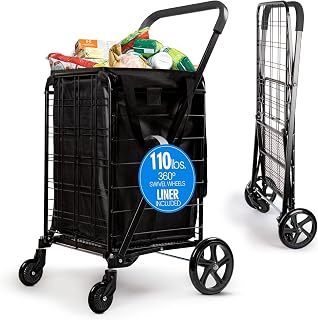




Finding a genuinely good-value cart in India is not simply about choosing the lowest-priced model. The right cart should match the type of load, available space, flooring, frequency of use, wheel quality, construction material, storage layout and expected maintenance. A compact three-tier utility trolley may be ideal for a kitchen or bathroom, while a larger platform cart or heavy-duty trolley is better suited to moving boxes, equipment or supplies.
For this 2026 buying guide, value should be understood as the balance between purchase cost, useful capacity, durability, convenience and suitability for the intended job. A cart that costs less but has undersized wheels, weak joints or insufficient load capacity can be poor value if it needs replacement quickly. Conversely, paying more for features that you never use can also reduce value.
When comparing carts available in India, look beyond star ratings and promotional claims. Check the manufacturer's stated dimensions, maximum load, materials, wheel construction, shelf configuration, assembly requirements and intended environment. Product specifications can vary substantially between models that look almost identical.
The word “cart” covers several different product categories. Identifying the correct type before comparing individual models is one of the easiest ways to avoid a disappointing purchase.
Kitchen carts are designed primarily for organising frequently used items and moving them around the home. They are useful for cookware, pantry supplies, bottles, utensils, small appliances and other everyday items. Slim models can also provide storage in apartments where conventional cabinets or shelves are difficult to add.
IKEA's RÅSKOG and NISSAFORS ranges illustrate the compact utility-trolley category, with metal construction, multiple storage levels and casters designed for moving the trolley around the home. Current IKEA India specifications show that load limits can differ considerably between trolley models, which is why checking the stated capacity is more useful than judging strength from appearance alone.
Storage carts are primarily about organisation rather than transporting very heavy loads. They work well in bedrooms, study areas, craft spaces, laundry areas, bathrooms and home offices. Look for shelves with useful depth, a sensible gap between tiers and enough clearance for the objects you intend to store.
A serving cart is intended for moving food, drinks, dishes or tableware over relatively short distances. Stability matters more than maximum capacity because the contents may be fragile or spillable. A raised edge around shelves can be particularly useful for preventing smaller items from sliding during movement.
Heavy-duty carts are appropriate when the primary requirement is moving heavier loads. These models need a stronger frame, larger wheels and a stable base. Pay particular attention to the manufacturer's maximum load rating and whether that rating applies to the entire cart or to each shelf individually.
Platform carts and hand trucks are better choices when transporting boxes, appliances, tools or bulky packages is more important than providing multiple storage levels. A platform design usually offers a larger continuous loading surface, while a hand truck is more suitable for tall or stacked items that can be secured against its frame.
Folding carts are particularly useful when storage space is limited. Their biggest advantage is not necessarily load capacity but the ability to collapse when they are not being used. Before buying one, inspect the folded dimensions as carefully as the open dimensions. A cart that technically folds but remains bulky may still be inconvenient in a small apartment.
The frame is the structural foundation of a cart. Steel generally provides a rigid structure and is common in utility trolleys. Powder-coated steel can offer a practical finish for indoor household applications, while stainless steel may be preferable when resistance to moisture and corrosion is especially important.
Plastic carts can be lighter and easier to clean, and they can make sense for low-to-moderate loads. However, the quality of the plastic, thickness of structural sections and design of the joints matter more than the material name alone.
Open wire or mesh shelves are useful when ventilation, visibility and easy cleaning are priorities. Solid shelves are generally preferable when smaller objects could fall through openings. Wooden or bamboo surfaces can provide a more furniture-like appearance, but buyers should check the manufacturer's care instructions before using them around water or high humidity.
Wheels can determine whether a cart feels effortless or frustrating to use. Important characteristics include wheel diameter, wheel material, swivel capability and whether the casters have brakes.
A wheel lock is valuable when a cart needs to remain stationary while being loaded, unloaded or used as an additional work surface. Do not assume every trolley has locking wheels simply because it has four casters. Check the product specification or photographs carefully.
Load capacity should be treated as a critical specification rather than an optional detail. A trolley with three shelves may have a different maximum load for each shelf and for the complete unit. IKEA's published NISSAFORS specifications, for example, distinguish between load per tier and maximum overall load, demonstrating why buyers should read the complete specification rather than relying on a generic “heavy duty” label.
Leave a sensible margin below the published maximum when the cart will be moved frequently, used over uneven flooring or loaded unevenly. A concentrated load can behave differently from a distributed load even when the total weight appears acceptable.
Measure the intended parking location before ordering. Then measure the narrowest doorway, passage, lift entrance and turning area the cart will need to navigate.
Steel is a practical choice for buyers who want a rigid frame and a more substantial structure. Powder-coated steel is widely used for household trolleys because it combines a metal structure with a finished surface that is relatively straightforward to maintain.
Stainless steel is worth considering for environments where moisture, cleaning and corrosion resistance are important. It is commonly associated with kitchen and commercial-style equipment. However, stainless construction does not automatically make a cart suitable for every wet environment, so the manufacturer's intended-use information still matters.
Plastic can be an excellent choice where low weight, easy cleaning and resistance to everyday spills are priorities. For heavy loads, however, buyers should pay particular attention to the frame, shelf thickness, caster mounting points and published load rating.
Wood and bamboo can make a cart look more like furniture than utility equipment. They may be especially attractive for dining areas, kitchens and living spaces. Their suitability depends on the finish and care instructions, particularly if the cart will regularly encounter moisture.
Homes in India vary significantly in size and layout, so “best value” should be evaluated against the space and use case rather than as a universal ranking.
A larger cart is not automatically a better cart. If most of the available capacity remains unused, the additional size can make the product harder to store and manoeuvre.
Compact trolleys are especially useful in kitchens, bedrooms, bathrooms and study areas where the cart needs to move between furniture. IKEA describes its NISSAFORS range as suitable for tight spaces, with some configurations specifically designed to occupy narrow gaps. This illustrates an important buying principle: usable capacity includes the space a cart can access, not just the theoretical volume of its shelves.
When two products appear almost identical in photographs, compare them specification by specification rather than choosing solely by price or rating.
Customer reviews can reveal practical issues that are difficult to identify from specifications alone, but they should be interpreted carefully. A high average rating does not necessarily mean that a cart is suitable for your particular application.
Instead of focusing only on the overall rating, look for repeated comments about wheel movement, assembly, stability, shelf strength, dimensions and long-term use. Recent reviews can also help identify whether the current version of a product differs from an older version.
Photos submitted by customers can be useful for judging scale. A product can appear large in a catalogue photograph but be considerably smaller when placed next to ordinary kitchen cabinets, desks or appliances.
The cheapest cart may not be the least expensive option over its useful life. Weak casters, unstable joints or inadequate capacity can make an apparently inexpensive purchase unsuitable.
A cart may have a strong frame but still perform poorly if its wheels are too small or unsuitable for the floor. Consider tile joints, thresholds, rugs and other transitions before choosing a model.
Always distinguish between the maximum load for one shelf and the maximum load for the complete cart. Distributing weight across shelves can also affect stability.
Measure the actual installation or parking location. Also account for handles and wheels, not just the dimensions of the shelves.
Indoor utility carts are not automatically suitable for balconies, terraces, garages or exposed outdoor areas. Moisture, sunlight, dust and uneven surfaces can accelerate deterioration or affect wheel performance.
Heavy items placed high on a trolley can raise the centre of gravity and make the unit less stable. Where possible, keep heavier loads lower and distribute weight evenly.
Ratings generally describe customer satisfaction, not structural load capacity. A compact household trolley can receive excellent feedback while still being unsuitable for heavy equipment.
Brand recognition can be useful as a starting point, but it should never replace specification checking. Established names such as IKEA, Nilkamal and other established home-storage and utility-equipment manufacturers may offer different cart categories, materials and intended uses. Compare the specific model rather than assuming every product from a recognised brand has the same construction quality.
IKEA is particularly relevant for compact household trolleys. Its India catalogue currently includes models such as RÅSKOG, NISSAFORS and KUNGSFORS, with substantially different dimensions, materials and stated load limits. For example, current IKEA India information lists a RÅSKOG configuration with a maximum load of 18 kg and a NISSAFORS configuration with a maximum load of 21 kg, illustrating why model-level comparison matters even within the same brand.
Entry-level models can be sensible for light household organisation, temporary storage and occasional movement. The most important checks are structural stability, caster quality and whether the published capacity matches your intended load.
Mid-range models often provide a useful balance between construction, storage capacity and finish. This is usually the category where buyers should spend the most time comparing specifications because relatively small price differences can correspond to meaningful differences in materials, wheels and design.
Premium models can make sense when the cart will be used frequently, needs specialised materials or must perform a particular task. The extra cost is worthwhile only when the additional construction or features solve a genuine requirement.
Good maintenance is straightforward but can significantly improve the usability of a trolley over time. Wipe dust and spills from shelves rather than allowing residue to accumulate. If the manufacturer specifies a particular cleaning method, follow that guidance rather than applying aggressive chemicals.
Check screws, bolts and joints periodically, especially after the cart has been assembled and used frequently. Some products specifically recommend retightening fasteners when necessary. Inspect the caster mounting points as well, because looseness at the wheel assembly can affect stability and rolling performance.
Do not leave a household cart in standing water unless it is specifically designed for that environment. Even materials that resist ordinary moisture may have vulnerable joints, fasteners or wheel components.
Floor compatibility is frequently overlooked. A cart that rolls smoothly on a showroom-style hard floor may behave differently on textured tiles, rugs, thresholds or uneven surfaces.
In everyday Indian shopping terminology, “cart” and “trolley” are often used interchangeably. Retailers may use “utility trolley,” “storage trolley,” “kitchen trolley,” “utility cart,” “rolling cart” or “serving cart” for products that perform similar functions.
The more useful approach is to ignore the label and evaluate the physical design. A three-tier trolley may function as a storage cart, while a flat platform trolley may be intended primarily for transporting loads. The intended application and specifications are more important than the terminology used in a product title.
Before choosing one of the value picks in this category, score each shortlisted product against the factors that matter most to you.
This framework prevents a low price or impressive-looking design from dominating the decision. If a cart fails the suitability test, a discount does not make it good value.
A narrow, multi-tier utility trolley is often the most practical choice when floor space is limited. Look for compact width, useful vertical storage and casters that can manoeuvre around furniture. Slim designs such as the NISSAFORS category demonstrate how a trolley can provide storage while occupying relatively little floor area.
There is no single best material. Steel is a strong general-purpose choice, stainless steel can be useful where moisture resistance is important, and plastic can be advantageous when low weight and easy cleaning are priorities. Choose according to the environment, load and maintenance requirements.
Not necessarily. Three tiers provide more vertical storage, but two wider shelves may be more useful for larger objects. The best configuration depends on what you plan to carry.
Choose a cart whose published capacity comfortably exceeds your normal load. Do not rely on labels such as “heavy duty” without checking the manufacturer's actual load specification.
IKEA offers several household trolley designs with published dimensions, materials and load specifications, making them straightforward to compare. Whether one represents good value depends on your required capacity, space, features and current price. RÅSKOG and NISSAFORS are examples of compact trolley designs currently listed by IKEA India.
Only when the manufacturer's instructions permit that use. A product may tolerate occasional splashes without being intended for consistently damp conditions. Check the care instructions and stated environment before using a kitchen trolley in a bathroom.
Locking wheels are useful when the cart needs to remain stationary during use. They are particularly helpful when a trolley doubles as a work surface or when items need to be loaded and unloaded without the cart moving.
Check the exact dimensions, load capacity, materials, wheel design, shelf spacing, assembly requirements, intended use and recent customer feedback. Compare the manufacturer's specification with the retailer listing to make sure you are evaluating the correct model or variant.
Start with the minimum specifications your use case requires and eliminate products that fail those requirements. Then compare construction, capacity, wheels, dimensions and current prices among the remaining options. This is more reliable than starting with the cheapest products and trying to determine later whether they are adequate.
The best-value cart is the one that performs its intended job reliably without paying for capacity or features you do not need. For compact household storage, prioritise dimensions, shelf layout and manoeuvrability. For heavier work, place greater emphasis on frame construction, wheel design and verified load capacity. For kitchens and moisture-prone areas, examine materials and care instructions carefully.
Before making a final purchase, compare the shortlisted models side by side, read current customer feedback, verify the manufacturer's specifications and check today's price from trusted Indian retailers. Product prices, colours, configurations and availability can change throughout 2026, so the specification of the exact variant you are purchasing should always take precedence over an older recommendation or generic product description.