

♥ Wishlist
Compare 54 verified Armoires for Home in India products in India. Reviews, ratings, pros, cons and buying advice updated for October 2026.


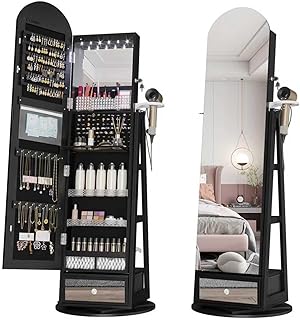


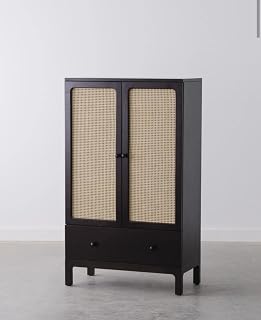


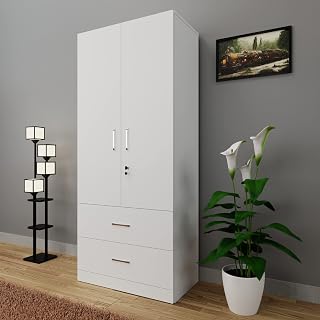


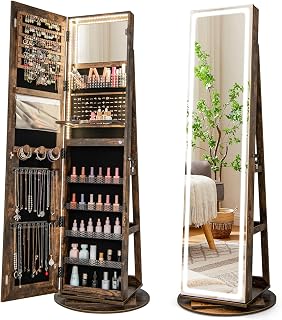
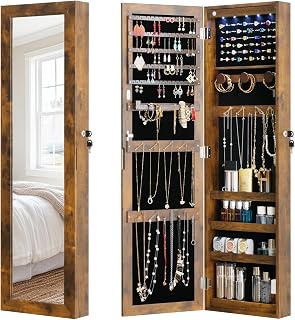


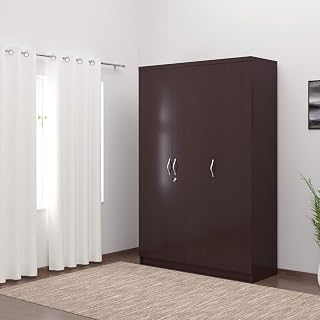


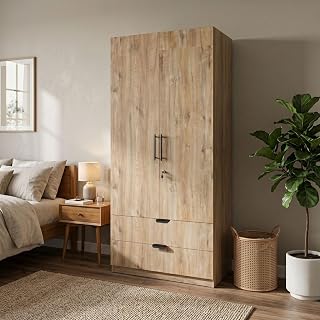


Choosing an armoire is less about finding the largest wardrobe and more about matching storage capacity, room dimensions, construction quality, accessibility and long-term practicality. In Indian homes, an armoire may serve as a primary wardrobe, a secondary clothes cabinet, a guest-room storage unit, or a multipurpose cupboard for clothing, bedding and household essentials.
The best value does not necessarily mean the lowest purchase price. A comparatively inexpensive armoire can become poor value if its shelves are inadequate, doors require excessive clearance, the structure feels unstable, or the internal layout does not suit the way you organise clothes. Conversely, a moderately priced model with useful compartments, sensible dimensions and durable construction can offer better value over several years.
Before choosing from the best value picks available in India, compare the complete specification rather than relying only on photographs, star ratings or a product title. Pay particular attention to dimensions, material, number of shelves, hanging space, door configuration, weight capacity where specified, assembly requirements and the type of room in which the unit will be installed.
A value-oriented armoire should balance useful storage with acceptable construction and a price appropriate to its intended use. A visually impressive cabinet is not automatically a good choice if much of its internal space is difficult to access or if its dimensions are unsuitable for the room.
Material selection has a direct effect on appearance, weight, maintenance, durability and perceived value. When comparing wardrobes and armoires sold in India, do not assume that one material is universally superior. The right choice depends on the room, expected usage and construction quality.
Engineered wood is widely used for contemporary furniture because it can provide a uniform appearance and predictable dimensions while keeping manufacturing costs manageable. Common descriptions may include particle board, MDF or other engineered panels. These terms should not be treated as interchangeable: panel composition, thickness, edge treatment and overall construction can vary considerably between products.
For an engineered-wood armoire, inspect the stated board material, panel thickness where provided, edge finishing and hardware. Avoid judging structural quality solely from the exterior finish.
MDF can provide a smooth surface suitable for painted or laminated furniture. Its usefulness in an armoire depends on how it is used within the structure and how the furniture is protected from moisture. MDF-based furniture should generally be kept away from prolonged exposure to water and damp conditions.
Particle board can help manufacturers produce affordable storage furniture, making it common in value-oriented wardrobes. However, the overall product depends heavily on panel density, thickness, joining methods, edge finishing and hardware. A particle-board armoire should therefore be assessed as a complete construction rather than by material name alone.
Solid-wood armoires can provide a traditional appearance and substantial construction, but they may also be heavier and more expensive. Wood species, joinery, finish quality and moisture management matter when comparing models. Solid wood is not automatically the best-value option for every bedroom, particularly where budget and portability are important.
Metal wardrobes and armoires can be useful where robustness and straightforward maintenance are priorities. They are particularly relevant to utility rooms, staff accommodation and other environments where furniture may experience heavier everyday use. Consider ventilation, corrosion resistance, finish quality and the design of shelves and doors.
Hinged doors provide a familiar full-width opening and can make the interior easy to inspect. Their main drawback is the clearance required in front of the cabinet. Measure the door swing together with nearby beds, desks, dressing tables and other furniture.
Sliding doors can be useful in compact bedrooms because the doors do not swing outward. However, the opening may expose only part of the storage area at a time. The quality of the sliding mechanism is therefore important, particularly if the doors will be opened frequently.
Three- or four-door configurations can divide storage into useful zones. They may work particularly well for couples or shared bedrooms where different sections need to be assigned to different users.
Storage capacity should be evaluated by the type of belongings you intend to keep inside. A household that primarily stores folded clothing has different requirements from someone who needs substantial hanging space for shirts, dresses, suits or traditional Indian garments.
One of the most common armoire-buying mistakes is checking only the product width. A proper measurement should account for width, depth, height, door movement, delivery access and the final installation position.
Width primarily determines how much horizontal storage the cabinet can provide. A wider armoire may offer additional hanging or shelving zones but requires more wall space.
Depth affects both capacity and room circulation. Excessive depth can make a bedroom feel cramped even when the cabinet provides generous storage.
Height can increase usable capacity without increasing the floor footprint. However, very tall furniture should be evaluated for installation practicality and stability.
Always compare the listed external dimensions with the usable internal dimensions when those measurements are available. External size alone does not tell you how much clothing the cabinet can actually hold.
The interior arrangement is often more important than the number of doors. A cabinet with fewer but better-designed compartments can be more practical than a larger model filled with awkwardly positioned shelves.
Check shelf spacing before buying. Closely spaced shelves can work well for smaller folded garments but may become restrictive for bulky clothing or bedding. Widely spaced shelves provide flexibility but can encourage unstable stacks of clothing.
A hanging rod is useful for garments that crease easily. Check its position and the available vertical clearance. If you intend to hang long dresses or coats, make sure the internal height accommodates them without forcing garments to fold.
Drawers can improve organisation for smaller garments and accessories. Evaluate drawer depth, opening clearance and hardware rather than simply counting the number of drawers.
Adjustable shelves can be particularly valuable because storage needs change over time. If shelves can be repositioned, check the adjustment mechanism and the range of available positions.
Brand familiarity can be useful as a starting point, but it should not replace specification-level comparison. Depending on the style and price segment, shoppers may encounter names such as IKEA, Godrej Interio, Nilkamal, Wakefit, HomeTown, Durian and Zuari. The exact model, construction, dimensions and current customer feedback should always be checked before making a purchase decision.
For marketplace shopping, compare the same brand across different models rather than assuming that all products from a manufacturer use identical materials or hardware. A brand can have different furniture ranges aimed at different budgets and use cases.
When two models appear similarly priced, create a specification comparison rather than choosing based on appearance alone. Consider storage layout, material, dimensions, hardware, assembly requirements and current customer feedback.
Photographs are useful for evaluating style but cannot reliably communicate panel thickness, hardware quality or internal usability. Always examine the specification and dimensions.
A large hinged-door cabinet may fit against the wall but become difficult to use when the doors open into the bed or another piece of furniture.
A cabinet can fit perfectly in the bedroom yet be difficult to move through the entrance, staircase or lift. Check packaged and assembled dimensions where available.
Additional shelves are not automatically better. Excessively shallow or closely spaced compartments can reduce flexibility.
Furniture intended for a dry bedroom may not be appropriate for locations exposed to regular splashes, condensation or persistent dampness. Follow the manufacturer's care instructions for the specific material.
Flat-packed furniture may require substantial assembly. Before ordering, check whether assembly is included in the listing, whether specialist installation is required and whether the product can be safely assembled in the intended room.
Tall storage furniture should be installed and used with stability in mind. Follow the manufacturer's assembly and anchoring instructions, particularly for tall cabinets. Heavy objects should generally be positioned according to the manufacturer's guidance rather than concentrated in an upper compartment.
Keep doors and drawers properly aligned and do not exceed stated load limits where the manufacturer provides them. If a cabinet begins to wobble, develops loose joints or shows signs of damaged hardware, address the issue rather than continuing normal use.
Good organisation can increase the practical capacity of an average-sized armoire without buying a larger cabinet. Place frequently used clothing at accessible heights and reserve higher compartments for seasonal items.
Regular maintenance helps preserve both appearance and functionality. The exact cleaning method should follow the care instructions for the material and finish.
Prioritise a compact footprint, sensible depth and efficient vertical storage. Sliding doors can be useful where door clearance is limited, while a narrower hinged cabinet may be preferable if full-width access is more important.
Look for clearly divided storage areas, multiple hanging zones and enough shelves to separate belongings. A larger cabinet is worthwhile only if the bedroom can accommodate it without restricting movement.
A simpler design can be sufficient because guest-room furniture may not require the same storage capacity as a primary bedroom. Focus on dependable construction, straightforward access and dimensions appropriate to the room.
Portability, assembly and reasonable weight can become more important for renters. Flat-packed furniture may be easier to move between homes, provided the construction is suitable for repeated assembly and disassembly.
Choose an interior layout with broad shelves and sufficient hanging space. The ideal configuration depends on whether the wardrobe will mainly store folded sarees, salwar suits, kurtas, shirts or mixed clothing.
Spending more can make sense when it directly improves a requirement that matters to you. For example, a better interior layout may be worth paying for if the armoire is your primary wardrobe, while premium decorative detailing may provide little practical benefit if the furniture is intended for a utility room.
Customer reviews are most useful when treated as supplementary evidence rather than as a substitute for specifications. Focus on recurring observations instead of isolated praise or criticism.
When evaluating an armoire on Amazon India or another trusted retailer, inspect the complete listing rather than relying on the headline title. Confirm the current dimensions, material, colour or finish, included components, assembly information and seller-provided specifications.
Check the latest customer reviews and photographs where available, and compare the listed specifications against competing models. Product availability, pricing and offers can change, so the information displayed at the time of purchase should be treated as the current reference.
There is no single best armoire for every Indian household. The right choice depends on available space, storage requirements, preferred material, interior configuration and budget. Compare current models using these factors rather than selecting solely by brand or popularity.
There is no universally best material. Engineered wood can suit shoppers seeking contemporary furniture at a value-oriented price, solid wood may appeal to buyers who prefer traditional construction, and metal can suit certain utility applications. Construction quality and suitability for the room are as important as the material label.
Not necessarily. A tall but relatively shallow cabinet may use vertical space efficiently, whereas a very deep or wide armoire can restrict movement. Measure the room and consider door clearance before choosing a large model.
An armoire can be an excellent choice when you want a freestanding storage cabinet with a particular furniture style or flexible placement. A conventional wardrobe may be preferable when maximum integrated storage or a specific modular configuration is the priority.
Choose based on room layout. Hinged doors generally provide broad access to the interior but need front clearance. Sliding doors reduce the swing area and can work well in compact bedrooms, although only part of the cabinet may be accessible at once.
Compare the relevant product dimensions with the clear width and height of your entrance, passageways and staircase or lift. If the product requires assembly, check its packaged dimensions and assembly requirements as well.
The ideal number depends on what you store. Folded clothes generally benefit from several appropriately spaced shelves, while garments that need hanging space require more vertical clearance. More shelves are useful only when their spacing matches your belongings.
Tall furniture should be assembled correctly and stabilised according to the manufacturer's instructions. Follow any supplied anchoring guidance and avoid placing excessive weight in unsupported upper areas.
Keep it dry, clean spills promptly and use cleaning products appropriate for the stated finish. Avoid prolonged moisture exposure and periodically inspect hardware such as hinges, handles and sliding mechanisms.
Not automatically. Established brands such as IKEA, Godrej Interio, Nilkamal, Wakefit, HomeTown, Durian and Zuari can provide useful starting points for comparison, but individual models should still be judged by specifications, construction, layout and current customer feedback.
Compare dimensions, material, internal layout, hanging space, shelf configuration, door type, assembly requirements, current customer feedback and the latest total purchase price. Also verify that the product is suitable for the room where it will be installed.
The strongest value choice is the armoire that solves your actual storage problem without introducing new space, access or maintenance problems. Start by measuring the room, then define the clothing and household items that need to be stored. From there, compare construction material, dimensions, interior layout, door design and hardware.
For 2026 shopping in India, treat ratings and reviews as supporting information rather than the entire decision. Product specifications should establish whether a cabinet fits your requirements, while recent verified customer feedback can help identify practical issues that may not be obvious from photographs. Finally, check the current listing, price, availability and included services immediately before purchasing because marketplace information can change.
A carefully matched mid-range armoire can often deliver better overall value than a larger or more expensive model whose capacity does not suit your belongings. The goal is not simply to buy more storage; it is to buy storage that remains useful, accessible and appropriate for your home.